

There is a corner of Shanghai where grey brick Shikumen walls meet glass shopfronts. Where an alley that once led to a family kitchen now leads to an Italian restaurant. Where the past was not torn down. It was redesigned.
Xintiandi is not the oldest part of Shanghai. It is not the quietest or the cheapest. But no other neighborhood tells the story of the city‘s transformation quite like this one.
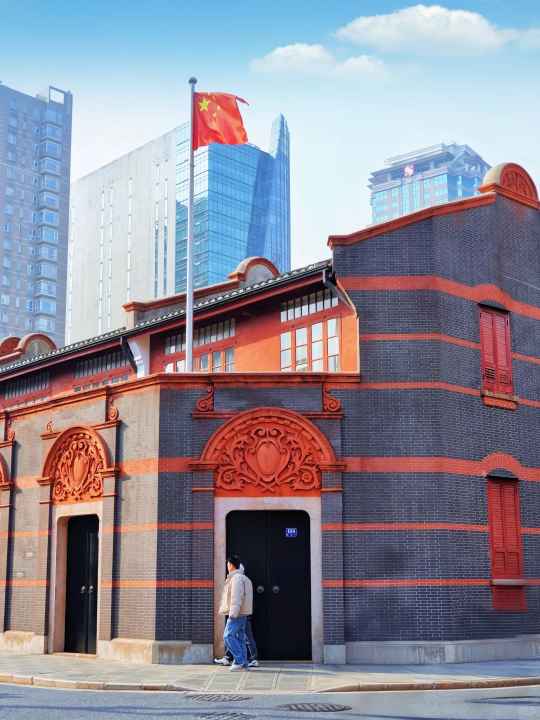
From Crumbling Lanes to Global Blueprint
In the late 1990s, the area between Huangpi Road and Madang Road was a maze of dilapidated Shikumen houses. These stone-gate homes had once been respectable addresses for middle-class families. By the 1990s, they were overcrowded, under-maintained, and scheduled for demolition.
The developer, Shui On Land, made a decision that changed how China approaches heritage. Instead of clearing the land for glass towers, they kept the exterior walls and rebuilt everything behind them. The brick facades remained. The stone gate arches remained. But inside, they installed modern plumbing, electrical systems, and floor plans suited for retail and hospitality.
When the project opened in 2001, critics said it was fake. A Disneyland version of old Shanghai. But visitors disagreed. Tourists came. Shoppers came. Other developers took notes. Today, the Xintiandi model has been replicated in cities across China – from Chengdu‘s Taikoo Li to Beijing‘s Guomao.
Love it or question it, Xintiandi changed the rules.
North Block vs South Block: Two Different Experiences
Most first-time visitors wander into the main square and assume they have seen it all. But Xintiandi is two neighborhoods, not one.
North Block (Xingye Road)
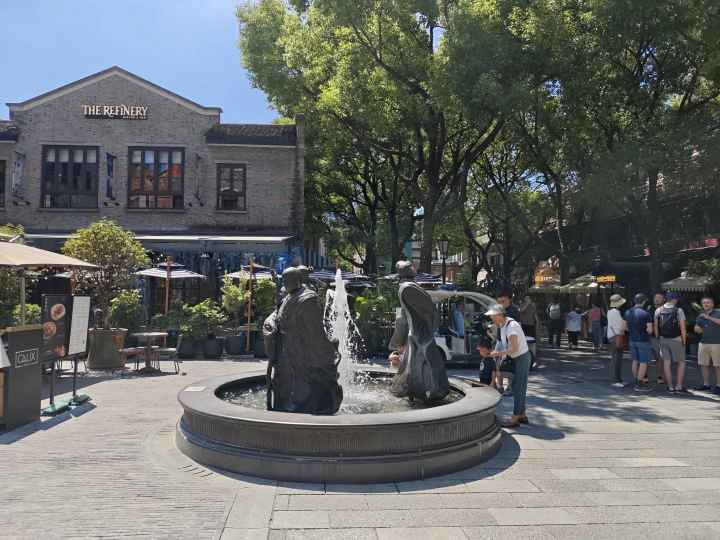
This is the face of Xintiandi that appears in travel guides. Pedestrian streets lined with restored Shikumen houses. International brands. Outdoor cafes. On a sunny weekend afternoon, every table is full. The crowd is a mix of tourists, office workers, and shoppers from nearby Huaihai Road.
The architecture here is the star. You can walk through the alleyways and see the original stone gate frames, the dark brick, the wooden shuttered windows. The buildings look old because they are old – just rebuilt from the inside.

Key stops in the North Block:
- Plaza 333: A shopping center focused on emerging Chinese designers.
- The House of Roosevelt: A music and dining complex in a restored 1920s building.
- Xintiandi Style I & II: Open-air shopping streets with a mix of mid to high-end brands.
South Block (Zizhong Road / Taicang Road)
Most tourists never make it to the South Block. This is a mistake. The South Block is quieter, more residential in feel, and lined with better restaurants. The crowd shifts from international tourists to Shanghai residents who actually live here.
The buildings are similar – Shikumen facades, modern interiors – but the pace is slower. You are more likely to see a parent pushing a stroller than a tour group holding a flag.
The South Block is also home to the site of the First National Congress of the Chinese Communist Party. This is the meeting house where the Party was founded in July 1921. The building has been preserved as a museum. It is free to enter and surprisingly interesting – not just for the history, but for the building itself, which is a well-preserved example of a Shikumen residence.
Key stops in the South Block:
- First National Congress Site: A preserved Shikumen house with original furnishings and a museum extension.
- Xintiandi Plaza: Office towers with a retail podium, home to the area‘s largest concentration of restaurants.
- Taicang Road: A tree-lined street with a more relaxed, neighborhood feel.
The Food Scene: More Than Brunch
Xintiandi has a reputation for being expensive and international. Both are true. But there is also good food here at reasonable prices if you know where to look.
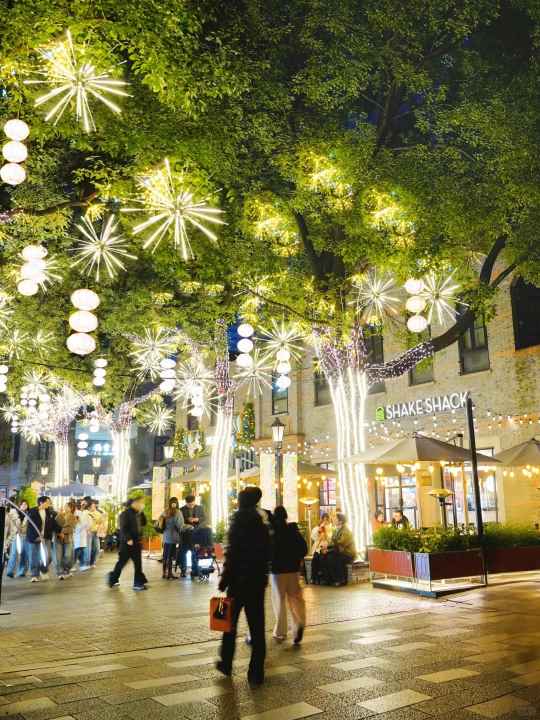
Brunch and Cafes
- Baker & Spice (Anfu Road original, Xintiandi location) : Reliable pastries, coffee, and salads.
- Wagas: The Shanghai chain that defined the city‘s healthy lunch scene.
- Shake Shack: American burgers on Taicang Road. Busy at lunch, manageable in the afternoon.
Dinner and Drinks
- Xintiandi Plaza (企业天地) : The office building complex on Zizhong Road has a lower level packed with Japanese ramen shops, hot pot chains, and Sichuanese restaurants. This is where the people who work in the area eat lunch. Prices here are significantly lower than the street-facing restaurants on Xingye Road.
- Hunan Cuisine (湘菜) : Look for the small shops on Zizhong Road between Huangpi Road and Madang Road. No English menus. No outdoor seating. Just good food.
- Liangshe (梁社): A hidden gem on Taicang Road serving Shanghainese home-style cooking. The entrance is easy to miss. The food is worth finding.
The Hidden Tables on Zizhong Road
Between the main tourist blocks and the office towers, there is a short stretch of Zizhong Road where locals eat. The restaurants here are not on Instagram. They do not have bilingual menus. But a lunch for two costs less than a cocktail on Xingye Road. Walk past the tour groups. Find these spots. Your wallet will thank you.
When to Go
| Time | What to Expect |
|---|---|
| Weekday mornings (10 AM – 12 PM) | The quietest time. Coffee shops are open. Retail stores are empty. Good for photography. |
| Weekday lunches (12 PM – 2 PM) | Office workers fill the quick-service spots. Street-facing restaurants remain quiet. |
| Weekday afternoons (2 PM – 5 PM) | Pleasant. Moderate crowds. |
| Weekday evenings (6 PM – 9 PM) | Dinner crowd arrives. Restaurant wait times can reach an hour. |
| Weekends (all day) | The most crowded time. South Block is more manageable than North Block. Avoid major Chinese holidays entirely. |
| Evenings after 9 PM | The main square lights up. Bars fill with after-dinner crowds. Late night snacks available. |
For photography, go on a weekday morning. The light is good. The streets are clean. And you will not have to wait for a tourist to move out of your frame.
For a relaxed meal, eat dinner on the South Block before 6 PM or after 8 PM. The North Block restaurants are consistently busier.
For bar-hopping, arrive after 9 PM. The cocktail bars on Xingye Road and Zizhong Road stay open past midnight.
How to Get There
| Station | Line(s) | Exit | Walking Time |
|---|---|---|---|
| South Huangpi Road | 1 | 1 | 5 minutes |
| Xintiandi | 10, 13 | 1, 2 | 5 minutes |
| Dashijie | 8 | 5 | 10 minutes |
The most convenient is Xintiandi Station (Lines 10 and 13) . Exits 1 and 2 lead directly into the retail complex. If you are coming from the Former French Concession, a 20-minute walk down Nanchang Road or Fuxing Road is a pleasant alternative to the metro.
Xintiandi vs. Tianzifang: Two Different Animals
| Xintiandi | Tianzifang |
|---|---|
| Polished, cleaned, restored | Gritty, layered, evolving |
| International brands mixed with luxury retail | Local artists mixed with souvenir shops |
| Expensive sit-down restaurants | Cheap street snacks and craft beer |
| Wide pedestrian streets | Narrow alleys that require navigation |
| Families and corporate groups | Backpackers and creative types |
You can visit both in one day. Start at Xintiandi for a coffee and window shopping. Walk 20 minutes east on Fuxing Road. End at Tianzifang for lunch and wandering. They are different. They are both worth your time.
Where to Stay Nearby (If You Are Still Looking for an Apartment)
Xintiandi is surrounded by prime residential streets. Nanchang Road, Fuxing Road, Sinan Road, and Xiangyang Road are all within walking distance.
If you are moving to Shanghai and want to live near Xintiandi, you have options:
- Modern compounds: The Summit, Chevalier Place, Kingsville (all on Wulumuqi Road / Anfu Road – 15 minute walk)
- Lane houses: Fuxing Road, Sinan Road, and Xiangyang Road have renovated garden villas and Shikumen houses
- Heritage apartments: Xiangyang Road, Huaihai Road, and Sinan Road have pre-war elevator buildings
The area is expensive. You are paying for location and walkability. But if your work is in or near Xintiandi, the convenience is hard to overstate.
Message us before you arrive. We can show you available units within walking distance of Xintiandi Station.
Final Thoughts
Xintiandi is not for everyone. Some visitors find it too polished, too commercial, too expensive. Those criticisms are fair.
But Xintiandi is also where Shanghai proved that old buildings could be economically useful, not just sentimental. The model has been copied across China and beyond. Love it or question it, the neighborhood changed how the country thinks about its own architecture.
Go for the architecture. Stay for the food. And when you are done, walk 10 minutes in any direction – you will find yourself in the real Shanghai, where the brick walls are not quite as clean and the restaurants do not have English menus.

Join The Discussion