

If you have spent any time in Shanghai, you have noticed them. Blue bikes. Yellow bikes. Green bikes. Parked neatly in designated zones near metro stations, office buildings, and residential compounds.
Shared bikes have become an essential part of daily life in Shanghai. For the 1-3 kilometer trip where walking is too far and taking a taxi feels excessive, they are often the best option. Since the industry’s chaotic early years, the system has matured significantly. In April 2026, the three major operators—美团 (Meituan), 哈啰 (HelloRide), and 滴滴青桔 (Didi Qingju)—signed industry-wide self-regulatory agreements to address parking violations and safety concerns .
This guide covers everything you need to know: the current players, latest pricing, new 2026 bike models, and practical tips for using the service as an expat.
The Three Major Players: Blue, Yellow, and Green
1. Meituan Bike (美团单车) – The Yellow One
Meituan Bike is the yellow-colored option, integrated into the Meituan super-app. Like its competitors, it now comes with a phone holder, a newly designed shock-absorbing saddle, and a front suspension fork to reduce vibration. The spring 2026 rollout introduced around 150,000 new shock-absorbing bikes across Shanghai, with a national target of 1 million replacements for the year .
For short trips under 3 kilometers, it is considered one of the most cost-effective options alongside Qingju, largely because it maintains a 30-minute base pricing structure in most scenarios.
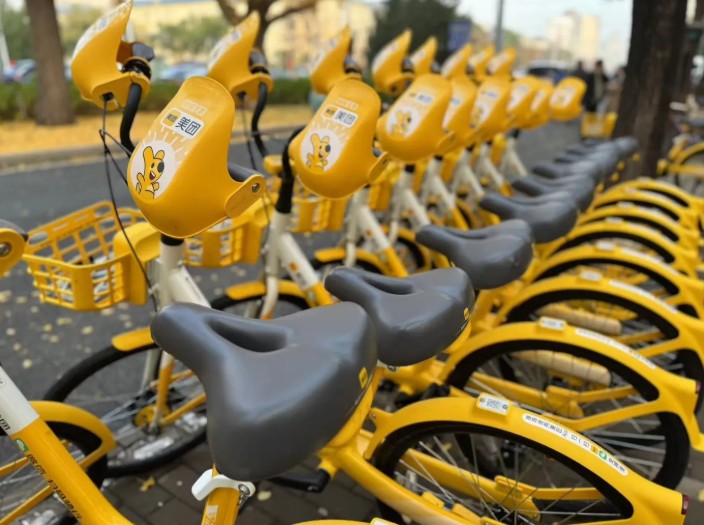
2. HelloRide / Hellobike (哈啰单车) – The Blue One
HelloRide is the blue-colored option, accessible through the standalone HelloRide app or via Alipay’s mini-program . In spring 2026, HelloRide introduced the “Ultra Anti-Bump Mood Bike” (超抗颠心情车), a bright artist-collaboration design that includes a cup holder in the basket for drinks and an upgraded suspension saddle .
Important: HelloRide’s pricing structure is different from the others. It charges per 15-minute block, meaning a 12-minute ride could cost the same as a full 15-minute block. For longer rides (over 30 minutes), its 60-minute base pricing plan can be cheaper .

3. Didi Qingju (滴滴青桔单车) – The Green One
Qingju is the green-colored option, accessible through the standalone Didi Qingju app or the main Didi app. In spring 2026, Qingju launched the “Steady Steady” (稳稳滴) BM3.0 model, featuring a larger basket (40mm deeper than its predecessor), a scented handlebar grip, and a suspension saddle with a coil spring .

2026 Pricing: What It Costs to Ride
Pricing has changed significantly. Starting around 2016 with free rides or 0.5 RMB per half hour, costs have climbed. Today, a one-hour ride can approach the price of a metro ticket . A 68-minute ride of about 10.8 kilometers costs 5.5 RMB – more than the 4 RMB metro fare for the same distance .
Standard Tariffs (Shanghai, 2026)
| Platform | Standard Rate | Base Period | Notes |
|---|---|---|---|
| Meituan Bike | 1.5 RMB | 30 minutes | No dynamic surge pricing reported |
| HelloRide | 1.5 RMB | 15 minutes | 1 RMB per additional 15 minutes; higher cost for short trips |
| Qingju | 1.5 RMB | 30 minutes | Weekday/Weekend rates vary by city |
Dispatch Fees: All three platforms enforce parking rules. Leaving a bike outside a designated zone can result in fees ranging from 15 RMB to 50 RMB .
Subscription Plans (2026)
Riding casually without a subscription is expensive. Most regular users subscribe to a monthly or quarterly plan:
Pro Tip: For daily commutes under 3 kilometers, a monthly subscription on Meituan or Qingju is often the cheapest option. For occasional users, paying per ride is still reasonable, but watch the 15-minute clock on HelloRide.
The 2026 Bike Upgrades: What You Will Actually Ride
Phone Holder (All Three)
Starting in spring 2026, all three major operators have deployed new models equipped with mobile phone holders. This makes navigation easier, particularly for expats unfamiliar with the streets or using a bike to reach a specific address. It also makes the bikes more convenient for visitors and casual riders .
Shock Absorption
All three new models feature improved shock absorption. Meituan’s latest model has the most noticeable effect: it includes a front suspension fork in addition to a thicker saddle. HelloRide features a shock-absorbing “super cushion” seat, and Qingju’s saddle includes a spring mechanism .
Unique Features
- HelloRide: Basket includes a cup holder for coffee or tea; bright artist-collaboration design colors .
- Qingju: New handlebar grips have a gentle scent; the basket is deeper (40mm) than previous models .
- Meituan: The phone holder is easiest to use with one hand; the seat uses a silver-ion antibacterial material to reduce odor .
Pricing Showdown: Which Should You Choose?
Scenario 1: Short Trip (Under 3 km, ~10-15 minutes)
Winner: Meituan or Qingju.
Their 30-minute base period means you pay only the base fare. With HelloRide, you pay for a full 15-minute block, so a 12-minute trip costs the same as a 15-minute trip .
Scenario 2: Long Ride (Over 30 Minutes, e.g., along the Bund or to a park)
Winner: HelloRide (if it’s within 60 minutes) or a subscription plan on any platform.
With HelloRide’s 60-minute base plan, a 45-minute ride costs 1.5 RMB. With Meituan, you enter a second pricing block, and costs climb .
Scenario 3: Daily Commute (2 rides per day, 5 days a week)
Winner: Monthly Subscription (all three).
Standard per-ride pricing for two daily trips is approximately 3 RMB per day, or 60 RMB per month. A 16.8 RMB monthly pass on Meituan or a 15.33 RMB offer on HelloRide is significantly cheaper .
Practical Tips for Expats
1. Download the Right App
| Platform | App |
|---|---|
| HelloRide (Blue) | HelloRide app or Alipay mini-program |
| Meituan (Yellow) | Meituan app |
| Qingju (Green) | Didi Qingju app or Didi app |
2. Understand the Parking Rules
The 2026 self-regulatory agreements mean platforms are more aggressively enforcing “no parking” zones. Before ending your ride, check the app to ensure you are within a designated drop-off zone. Leaving a bike outside a designated area triggers a dispatch fee of 15 to 50 RMB .
3. Look for the New Bikes
The new models with phone holders, better suspension, and unique features are rolling out gradually. They are more common near metro stations, universities, and large office parks. If you want the newest bike, look near the major hubs.
4. The Bike Is Not Yours
Never lock the shared bike with your own lock or take it into your apartment. You will be charged a continuous rental fee. Park it and end the ride in the app.


Join The Discussion