

There is a particular kind of magic that happens when you turn off a busy Shanghai thoroughfare and duck into a quiet lane house neighborhood. The noise of the city softens. The plane trees grow thicker overhead. And suddenly, you are walking through history.
Lane houses – or lilong (里弄) in Chinese – are the architectural soul of Old Shanghai. For decades, they have been the backdrop of daily life, from the bustling alleyways of the early 20th century to the chic restored homes of today. And nowhere are they more cherished than in the Former French Concession, now known as Old Xuhui (FFC).

If you are moving to Shanghai, chances are you have already seen photos of these charming brick homes with their French windows, iron balconies, and tree-lined streets. But what is it really like to live in a lane house? And why are expats – and locals alike – falling in love with them all over again?
Let us walk you through it.
What Exactly Is a Shanghai Lane House?
Lane houses emerged in Shanghai during the late 19th and early 20th centuries, blending Chinese courtyard traditions with Western architectural elements. The result was something uniquely Shanghainese: terraced homes built around narrow lanes (longtang), often featuring brick facades, stone gateways (shikumen), and decorative ironwork.
There are several types of lane houses, but the ones most sought after today are the lilong villas and xinyang (new-style) lane houses found throughout Old Xuhui. These typically offer:
- Two to three stories – Often with a small garden or terrace
- High ceilings and hardwood floors – Original features lovingly preserved
- French windows – Flooding interiors with natural light
- Brick or stucco exteriors – Aged beautifully over decades
Some lane houses are grand – once home to wealthy merchants or intellectuals. Others are more modest but equally charming. What unites them is a sense of place and history that you simply cannot find in a modern high-rise.
Renovated vs. Original: Which Is Right for You?
The Renovated Lane House (Modern Comfort, Historic Charm)
Most lane houses available for rent today have undergone significant renovation. A good renovation preserves the character – original fireplaces, exposed brick, high ceilings – while adding modern essentials:
- Central heating and air conditioning (a must for Shanghai’s hot summers and chilly winters)
- Updated kitchens with Western appliances
- Modern bathrooms with good water pressure
- Improved insulation and soundproofing

These homes offer the best of both worlds: the romance of old Shanghai with the convenience of 21st-century living. Expect to pay a premium for a quality renovation – typically ¥25,000–¥70,000+ per month depending on size, location, and garden access.
The Original (or Lightly Renovated) Lane House
For purists willing to trade some comfort for authenticity, original lane houses still exist. These may have:
- Older kitchens and bathrooms (sometimes functional, sometimes quirky)
- Single-pane windows (charming but noisy)
- Original floorboards (beautiful, but may creak)
- Window-unit air conditioners instead of central systems
The upside? Significantly lower rent – sometimes ¥15,000–¥25,000 per month for a space that would cost double after renovation – and an unbeatable sense of living in a genuine piece of Shanghai history.
The Neighborhood: Why Old Xuhui (FFC) Is So Beloved
You cannot talk about lane houses without talking about their setting. Old Xuhui (the Former French Concession) is widely considered Shanghai’s most livable neighborhood, and for good reason:
| Feature | Why It Matters |
|---|---|
| Plane trees | Shaded streets that stay cool in summer and glow golden in autumn |
| Low-rise skyline | No towering skyscrapers – just human-scale architecture |
| Walkability | Cafés, bakeries, small parks, and boutiques on nearly every corner |
| International community | Expats, locals, and long-term residents mix naturally |
| Proximity to amenities | Top international schools, hospitals, and metro lines are all nearby |
The area’s heartbeat is along roads like Wukang Road, Anfu Road, Hunan Road, and Fuxing Road West – each lined with lane houses, plane trees, and a steady stream of strollers, cyclists, and dog walkers.
The Avocado Lady – A Local Legend
No guide to Old Xuhui’s expat life would be complete without mentioning the Avocado Lady (niú yóu guǒ ā yí – 牛油果阿姨). Tucked away on Wulumuqi Road (near the intersection with Huaihai Middle Road), her tiny fruit and grocery shop has become something of a pilgrimage site for Shanghai’s international community.
Her real name is rarely used. Instead, everyone knows her as the Avocado Lady because of her famously well-priced avocados – a staple of expat brunch culture. But she also stocks:
- Fresh herbs (rosemary, basil, thyme – hard to find in regular markets)
- Imported cheese and yogurt
- Quinoa, chia seeds, and other “Western” pantry items
- Good quality olive oil and balsamic vinegar
- Seasonal fruits at fair prices – all without the markup of fancy import stores

What makes her shop special is not just the selection – it is the woman herself. She has been serving the neighborhood for years, recognizing loyal customers, and quietly making life better for everyone who discovers her door. For lane house residents, a quick walk to the Avocado Lady feels like a small daily ritual of belonging.
Pro tip: Bring cash or be ready to scan WeChat Pay. And go early – her best items sell out fast.
Other Expat Favorites in the Lane House Neighborhoods
Beyond the Avocado Lady, Old Xuhui is dotted with beloved spots that make lane house living so appealing:
| Spot | Vibe | Best For |
|---|---|---|
| Baker & Spice (Anfu Road) | Rustic-chic bakery | Morning coffee, walnut bread, people-watching |
| Commune Social (Xingfu Road) | Garden courtyard dining | Tapas and sunset drinks in a restored lane house |
| Sunflour (Anfu Road) | Bustling bakery | Sunflower-shaped pastries and weekend brunch |
| Café del Volcán (Yongkang Road) | Tiny specialty coffee | Serious espresso and a cozy, quiet escape |
| La Strada (Xiangyang Road) | Italian pizza | Casual outdoor seating, great for families |
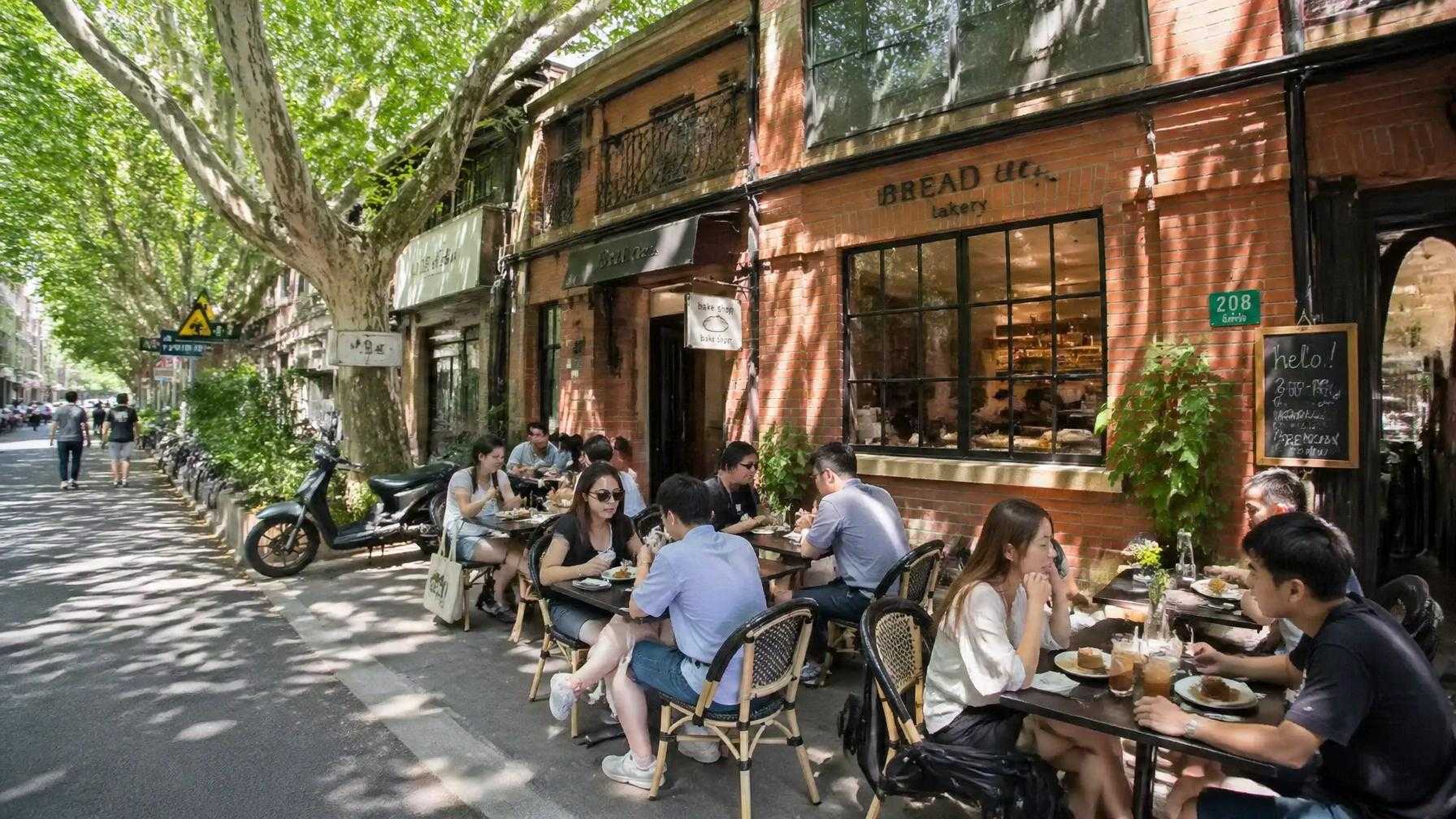
Living in a lane house means these places become your extended living room, coffee break, and weekend brunch spot – all within a ten-minute walk.
What to Consider Before Renting a Lane House
Lane houses are magical, but they are not for everyone. Be honest with yourself about these potential challenges:
The Noise Factor
Lane houses are often – you guessed it – on lanes. Depending on the building, you may hear neighbors through thin walls. Street noise (scooters, conversations, the bingqing gongyuan (trash collection) trucks early in the morning) is part of the deal. If you are a light sleeper, visit at different times of day before committing.
Energy Efficiency
Older buildings were not designed with modern insulation. Even renovated lane houses can be chilly in winter (your heating bill will reflect that) and hot in summer. Check for double-glazed windows and good AC coverage.
Stairs, Stairs, Stairs
Most lane houses have steep, narrow staircases. If you have mobility issues, young children, or plan to move heavy furniture – take note. Ground floor units with gardens exist, but they are rare and command higher rents.
Maintenance & Landlords
A lane house requires more upkeep than a modern apartment. Make sure your lease clearly states who is responsible for what – exterior repairs, garden maintenance, plumbing in old pipes. A good landlord (and a good agent) makes all the difference.
Is a Lane House Right for You?
Ask yourself these questions:
- Do I want a home with character and history – quirks and all?
- Am I willing to trade perfect modernity for charm and location?
- Do I love the idea of stepping out my door onto a tree-lined street with cafés and bakeries nearby?
- Am I comfortable with the idea that my home will have a few imperfections (and stories)?
If you answered yes, a lane house in Old Xuhui might be your perfect Shanghai home.

If you prefer silence, central air that works flawlessly, and elevators – no shame! A modern compound in Jing’an might suit you better. (And that is okay too. We help with both.)
Final Thoughts – Living the Lane House Life
There is a reason lane houses have become so popular among expats and locals alike. They offer something that no amount of luxury finishes can replicate: a sense of place. When you live in a lane house, you are not just renting square meters. You are becoming part of a neighborhood, a history, a way of life that has evolved over a century.
The morning vendors setting up their stalls. The elderly residents practicing tai chi in the lane. The smell of coffee drifting from a converted garage-turned-café. The Avocado Lady asking if you need anything special this week. These small moments add up to something greater than the sum of their parts.
A lane house is not just a home. It is an invitation to belong.
And if that sounds like what you are looking for – we know exactly where to find it.

Join The Discussion