

Moving to Shanghai with children is exciting — but finding the right school is usually the first big decision families face, and it can feel overwhelming. With over 50 accredited international schools across the city, covering every major curriculum from British and American to IB, French, German, and Singaporean, the options are genuinely impressive. But not every school is right for every family, and in Shanghai, where you live and where your child goes to school are decisions that are deeply connected.
At Shanghai Rentals, we work with relocating families every week. We’ve put together this guide to help you understand the international school landscape — and how your choice of neighborhood (especially Old Xuhui/FFC and Jing’an, where we specialize) affects your school options.

First: The Puxi vs Pudong Divide
Before diving into individual schools, you need to understand Shanghai’s fundamental geography. The city is split by the Huangpu River into two very different sides:
Puxi (west bank) is the older, more characterful side of the city — home to the Former French Concession, Jing’an, Changning, and Hongqiao. Tree-lined streets, lane houses, boutique cafés, and a strong expat community infrastructure. Most families who want a European feel to their Shanghai life end up in Puxi.
Pudong (east bank) is the modern financial district — glass towers, wider roads, newer compounds, and proximity to the international airport. Families posted to financial sector companies often live here.
Why does this matter for schools? Rush hour traffic between Pudong and Puxi is severe. A school on the wrong side of the river can easily add 90 minutes to your daily commute. Most families wisely choose a school close to where they live. If you’re renting in Old Xuhui (FFC) or Jing’an — our areas of expertise — you’ll want to prioritise Puxi-based schools.
Curriculum Types: What’s Available
Shanghai’s international schools offer four main curriculum tracks:
- British — English National Curriculum → IGCSE → A-Levels (and often IB Diploma as an alternative at upper secondary)
- American — US Common Core framework → AP (Advanced Placement) courses
- International Baccalaureate (IB) — PYP (Primary Years), MYP (Middle Years), and Diploma Programme; popular with internationally mobile families as it transfers smoothly between countries
- Bilingual / Hybrid — Blend of Chinese national curriculum with English-medium international frameworks; generally more affordable and open to both foreign and Chinese passport holders. We have another post about the Bilingual Schools in Shanghai.
One important practical note: international schools in Shanghai require at least one foreign passport holder in the family. Chinese mainland passport holders attend public or bilingual schools on a separate track. Always confirm eligibility directly with admissions before applying.
The Best Puxi Schools (Closest to FFC & Jing’an)
Shanghai American School (SAS)
| Curriculum | American (AP + IB Diploma) |
| Campuses | Puxi (258 Jinfeng Road, Minhang) Pudong (1600 Lingbai Road, Sanjiagang) |
| Ages | Pre-K through Grade 12 (ages 3–18) |
| Fees (2026/27) | RMB 246,000–316,800 per year (base tuition only; excludes entry fee, enrollment fee, transport, lunch) |
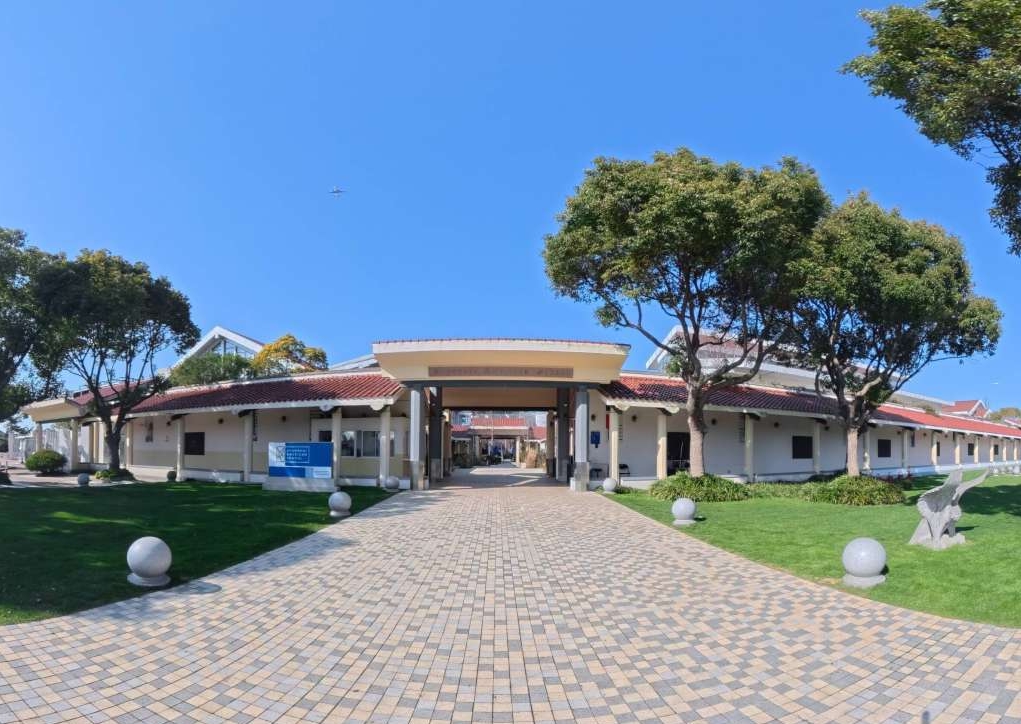
If there’s one name that carries genuine prestige in Shanghai’s international school world, it’s Shanghai American School (SAS). Founded in 1912, it is the oldest international school in China, and that long history shows in the quality of its facilities, the depth of its academic programming, and the strength of its global alumni network. The two campuses together span over 100 acres, with world-class facilities including advanced science labs, professional theatres, extensive sports fields and competition swimming pools.
Academically, SAS punches hard. It was the first school in Asia to offer the AP Capstone diploma, and today offers both AP and IB Diploma pathways side by side. This setup is relatively rare even among Shanghai’s premium international schools. The school serves nearly 3,000 students representing more than 40 nationalities, creating a genuinely diverse international community rather than a single dominant expat nationality.
The Puxi campus in Minhang is the more practical choice for families renting in Old Xuhui or Jing’an. It is covered by SAS’s paid school bus network, meaning a manageable school bus ride rather than a cross-river commute. For North American families moving to Shanghai, SAS is very often the first school on the shortlist. It is non-profit, WASC-accredited, and popular with expat families searching for housing across Greater Hongqiao, Gubei and central Puxi.
The British International School Shanghai (BISS) Puxi
| Curriculum | British (English National Curriculum → IGCSE → A-Levels + IB Diploma option) |
| Location | 111 Jinguang Road, Huacao Town, Minhang District (not Changning), Puxi |
| Ages | 2–18 |
| Fees (2026/27) | RMB 271,600–385,090 per year (base tuition only; excludes application, enrolment, bus, lunch) |
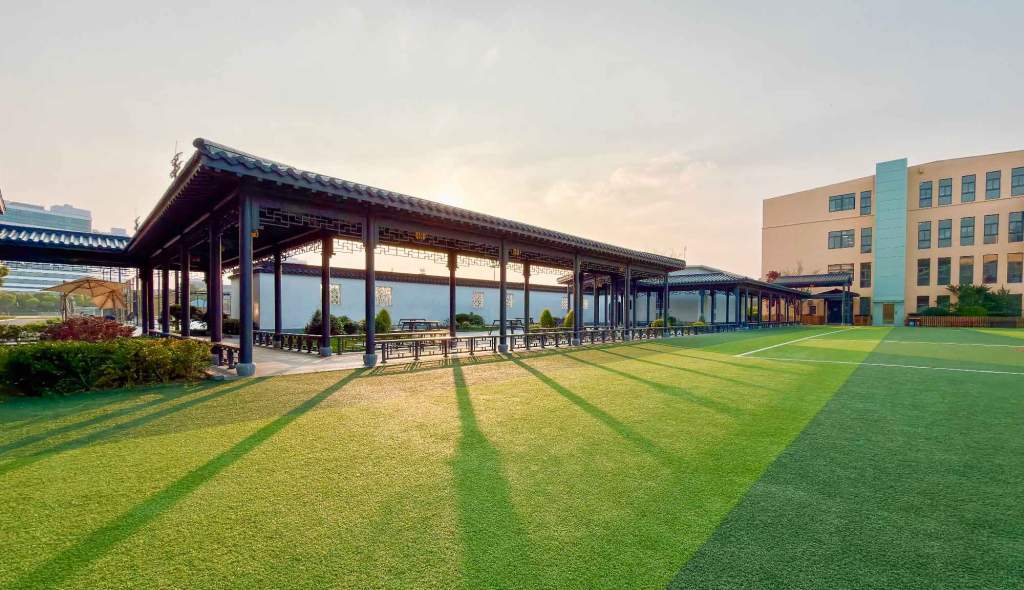
BISS Puxi is arguably the go-to choice for British and Commonwealth families living on the Puxi side. It is part of the Nord Anglia Education group, which gives students access to the network’s signature collaboration programmes with MIT and Juilliard, alongside a huge global student and alumni community. The school has a well-established, welcoming parent community and a strong track record of placements at top UK universities, plus growing admissions success to leading US and global institutions.
While its campus sits in Huacao, Minhang within the Greater Hongqiao expat belt, it remains commutable for families renting in the Former French Concession or Jing’an, a practical Puxi option without the need to cross the Huangpu River for school runs. BISS Puxi operates a dedicated paid school bus network covering central Puxi, Hongqiao, Gubei and Huacao villa compounds, a major consideration before signing a rental lease.
It offers robust EAL support, extensive after-school activities, strong Mandarin and modern language options, and rolling admissions, though popular year groups can fill quickly.
Britannica International School Shanghai
| Curriculum | British (English National Curriculum → IGCSE → A‑Levels) |
| Location | 1988 Gubei Road, near Wuzhong Road, Changning District (Gubei, close to downtown Puxi) |
| Ages | 18 months–18 years |
| Fees (2026/27) | RMB 260,000–367,600 per year (base tuition, includes textbooks and exam fees for Year 10+) |
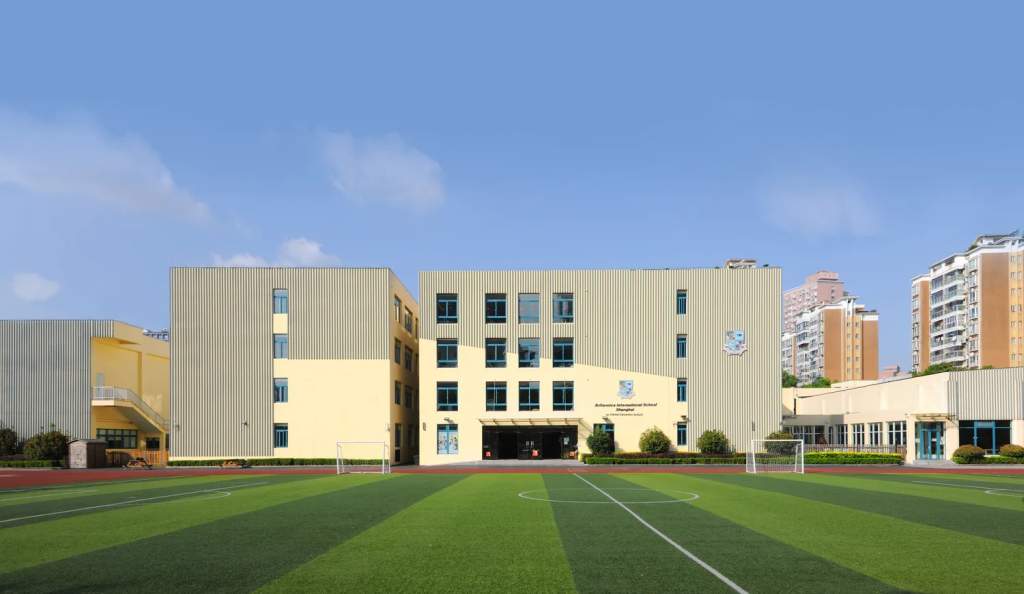
Britannica International School Shanghai holds a distinctive position in Shanghai. It is the only British‑owned, British‑managed school in the city, with fully qualified teachers originating from the British Isles. For families who want an authentically British environment and not just a British curriculum, this is an important distinction. Class sizes are kept intentionally small, and the school’s pastoral support system receives consistent positive feedback from current parents.
The school follows the full English National Curriculum from early years through to IGCSE and A‑Level examinations. It holds dual accreditation from COBIS and CIS in Shanghai, and delivers more than 100 after‑school activities each week alongside a broad world‑language programme covering eight different languages. It also provides dedicated EAL support for students whose first language is not English, helping new arrivals settle into academic life quickly.
Its Gubei campus location works very well for expat families looking for housing across central Puxi. The school runs an extensive door‑to‑door school bus network that covers the Former French Concession, Jing’an, Gubei and Hongqiao neighbourhoods. Many renting families choose Britannica to avoid long commutes out to villa‑heavy districts further west in Minhang. The central setting also puts international grocery stores, restaurants and daily amenities within easy reach for households living nearby.
Yew Chung International School of Shanghai (YCIS)
| Curriculum | Bilingual Yew Chung Curriculum → IGCSE → IB Diploma Programme (or HKDSE pathway) |
| Campuses | Puxi: Ronghua ECE (59 West Ronghua Ave, Gubei), Hongqiao Primary (11 Shuicheng Rd, Changning), Gubei Secondary (18 West Ronghua Ave, Gubei) Pudong: Regency Park (1817 Huamu Rd) Century Park (1433 Dongxiu Rd) Lingang campus (No.1 Yinlian Rd, Nanhui) |
| Ages | 2–18 (K2–Year 13) |
| Fees (2026/27) | RMB 166,900–366,300 per year (base tuition; excludes application fee ¥3,000, capital fee ¥15,000 for new Primary/Secondary, refundable deposit ¥25,000, school bus ~¥20,000/year, lunch) |
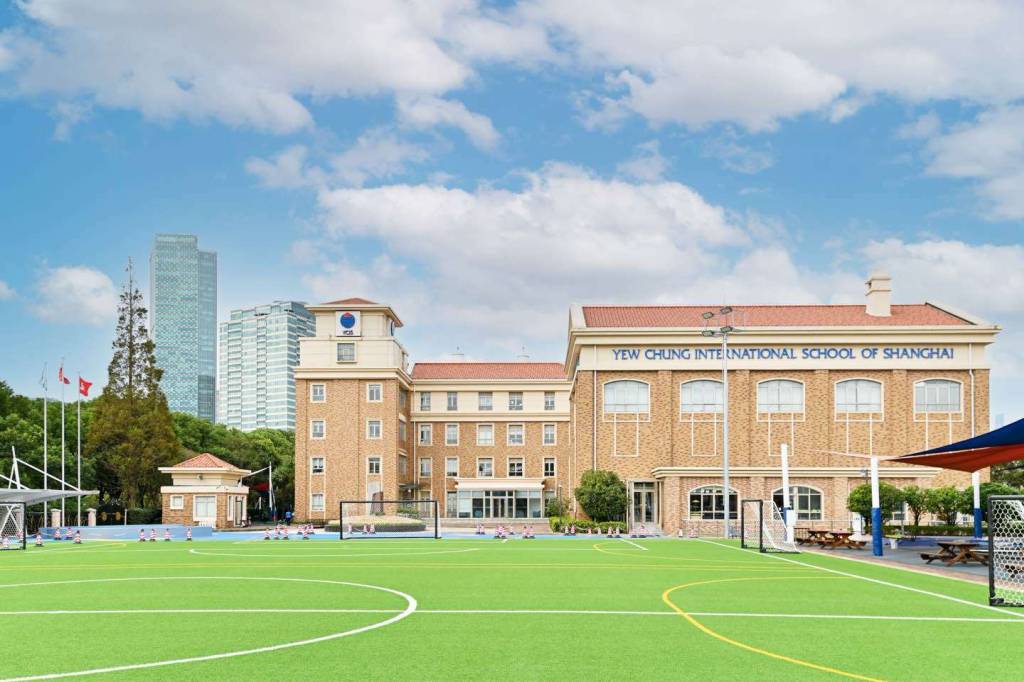
Founded in Shanghai in 1993 as the first independent international school officially recognized by the Chinese government, YCIS Shanghai is part of the Yew Chung Education family established in Hong Kong in 1932. Today it operates six campuses across Puxi, Pudong, and Lingang, serving over 2,500 students from more than 50 countries, taught by educators from over 20 nations. The school is fully accredited by the Council of International Schools (CIS) and is the only school in China to have received the Cambridge Award for Excellence in Education.
What genuinely distinguishes YCIS is its co-teaching model: every classroom has two fully qualified teachers — one Western, one Chinese — who share equal authority and plan lessons together from the earliest years. This is not a Chinese-language add-on; it’s a genuine bilingual immersion where children develop fluency in both languages naturally, with the curriculum itself written by YCIS’s own Curriculum and Professional Development Division rather than imported. In secondary, students sit IGCSEs in Years 10–11 and then choose between the IB Diploma Programme or the Hong Kong DSE in Years 12–13.
For families renting in Old Xuhui (FFC) or Jing’an, the Puxi setup is unusually practical: the Hongqiao primary campus on Shuicheng Road and the Gubei secondary campus on West Ronghua Avenue sit in western Changning, roughly a 20–30 minute drive without crossing the river, and the school bus network covers both FFC and Jing’an neighborhoods. Compared to SAS Puxi and SCIS, which are both further out in Minhang, YCIS’s Puxi campuses are noticeably closer to central expat living areas.
Shanghai Community International School (SCIS)
| Curriculum | IB Continuum — Primary Years Programme (PYP), Middle Years Programme (MYP), and Diploma Programme (DP) |
| Campuses | Hongqiao ECE (2212 Hongqiao Rd, Changning) Hongqiao Main (1161 Hongqiao Rd, Changning) Pudong (198 Hengqiao Rd, Zhoupu) |
| Ages | 2–18 (Nursery–Grade 12) |
| Fees (2026/27) | RMB 152,500–335,500 per year — all-inclusive: covers lunch, door-to-door bus, one uniform set, after-school activities, China trips, and a MacBook for Grades 6–12. Only application/enrollment fees and specialized student support are extra. |
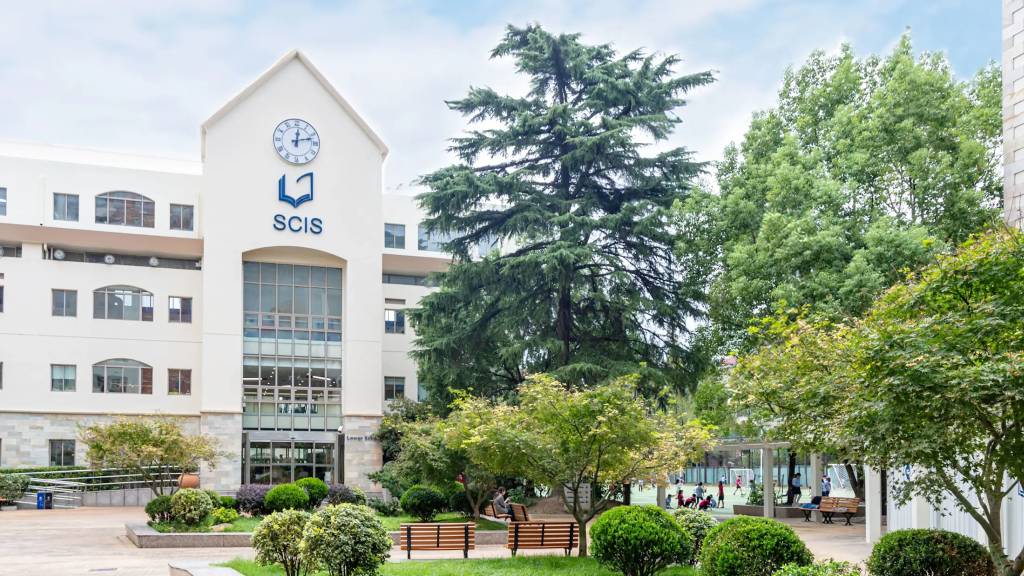
Established in 1996, SCIS began with 7 teachers and fewer than 50 students on a single campus in Changning; today it serves over 1,500 students across three campuses, representing more than 54 nationalities and 35 languages. The school is a non-profit, fully accredited by the Western Association of Schools and Colleges (WASC), and is an IB Continuum World School — meaning it delivers the full PYP → MYP → DP sequence, not just the Diploma at the end.
The single most underrated thing about SCIS is its all-inclusive tuition model. While other Shanghai schools quote headline numbers that exclude bus (RMB 20,000–45,000), lunch, uniforms, and after-school activities, SCIS folds all of those into the fee. When you do the real budget comparison, a RMB 335,500 all-in ticket at Hongqiao is genuinely competitive against schools quoting RMB 290,000–310,000 base plus extras.
Academically, SCIS posts strong IBDP results: the highest score of 45/45, and twice as many top-scoring students as the world average. Roughly 15% of graduates go on to the world’s top 10 universities and 40% to the top 50. The school also runs a notably generous language program — alongside Mandarin, it offers French, Spanish, Korean, and Dutch (LanguageOne), with after-school options in Finnish, Swedish, Danish, German, Italian, and Hindi — a big draw for non-Anglophone expat families.
For families renting in Old Xuhui (FFC) or Jing’an, the Hongqiao campuses are a practical choice: both are on Hongqiao Road in Changning, roughly a 15–20 minute drive west of the FFC without crossing the river. This is noticeably closer than SAS Puxi and SCIS’s own Pudong campus, which sit further out in Minhang and Zhoupu respectively.
Dulwich College Shanghai
| Curriculum | English National Curriculum → IGCSE → IB Diploma Programme (A-Levels coming to Pudong from 2027–28) |
| Campuses | Pudong: 266 Lan An Road, Jinqiao (Years 10–13 from 2027–28; DUCKS early years at 425 Lan An Road) Puxi: 2000 Qian Pu Jing Road, Maqiao, Minhang (Toddler–Year 9) |
| Ages | 2–18 |
| Fees (2026/27) | RMB 149,000–411,750 per year (half-day Toddlers at Puxi through Year 13; main range Nursery–Year 13: RMB 282,000–411,750). Includes IGCSE/IB exam fees. Excludes lunch (Sodexo, smart-card), bus (~RMB 21,500/year), uniform, and optional trips. One-time extras: application fee RMB 3,800, resource fee RMB 15,000 (refundable), capital development fee RMB 15,000 for new students. |
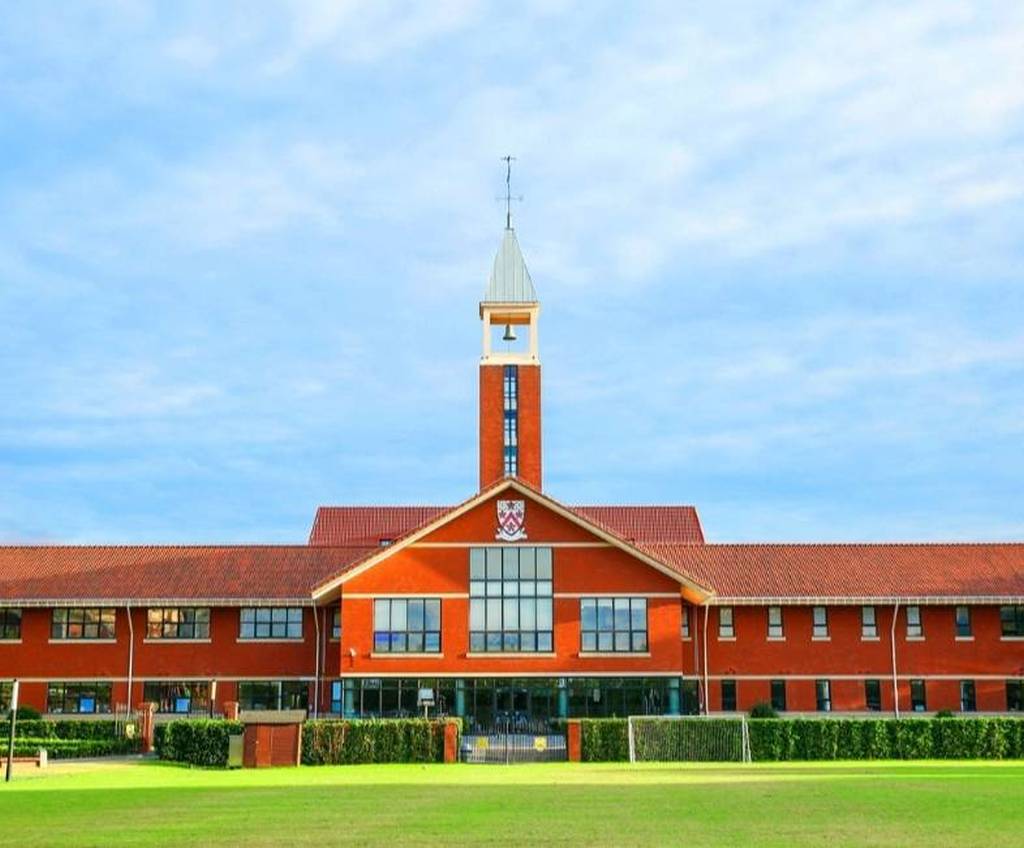
Important: Dulwich restructured its two Shanghai campuses in August 2026 under a “One College, Two Campuses” model. Both physical sites remain open, but they now operate under a single Head of College (Garry Russell). Going forward, Puxi caters to Toddler through Year 9, while Years 10–13 (IGCSE, IB Diploma, and soon A-Levels) consolidate at the Pudong campus in a phased transition through 2027–28. This means families choosing Dulwich for a child starting in early years will likely have them at Puxi through Year 9, then transition to Pudong for Upper School.
Dulwich College Shanghai Pudong opened in 2003 and is the larger campus with roughly 1,600 students; the Puxi campus followed in 2016 with about 450 students. The school is part of the Dulwich College International network, affiliated with Dulwich College in London (founded 1612). Academically, the Class of 2026 posted an average IB score of 38 at Pudong and 37.5 at Puxi — both well above the global average — and Pudong has held the top position on the China League IB table for consecutive years. Beyond academics, Dulwich offers over 100 co-curricular activities, the Duke of Edinburgh’s International Award, and a newly introduced Forest School programme at the Puxi campus.
For families renting in Old Xuhui (FFC) or Jing’an, the Puxi campus is in Maqiao, Minhang — roughly a 30–40 minute drive west, not a walkable or short-commute option from the FFC. It’s a spacious, green suburban campus (40,000 sqm) but it sits further out than SCIS Hongqiao or YCIS Gubei, and school bus routes do cover the FFC/Jing’an area. If your child will eventually move to Pudong for Year 10+, you may want to weigh whether a single-campus school (like SAS Puxi or Concordia) better fits your long-term rental location.
Shanghai Singapore International School (SSIS)
| Curriculum | IB Continuum (MYP → Diploma Programme, plus IB Career-related Programme — first school in China to offer it) with IGCSE in Years 9–10; Singaporean-influenced academic rigour |
| Location | 301 Zhujian Road, Huacao Town, Minhang, Puxi |
| Ages | 2–18 (Kindergarten through Grade 12) |
| Fees (2026/27) | RMB 210,000 (Kindergarten 1–2) → RMB 273,000 (Grades 1–6) → RMB 294,000 (Grades 7–8) → RMB 304,500 (Grades 9–10) → RMB 315,000 (Grades 11–12) per year. Application fee RMB 2,500; one-time matriculation fee RMB 20,000. ELA support RMB 25,000/year (Grades 1–6); bus RMB 20,000–21,500/year. |
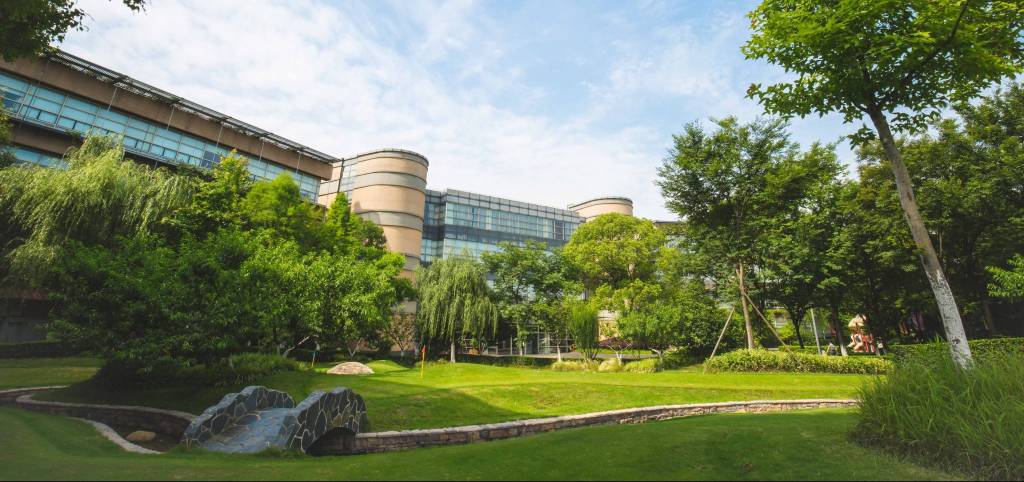
Founded in 1996 with just 18 students and nine teachers, Shanghai Singapore International School now serves roughly 1,200 students from 36 nationalities with a 7:1 student-to-faculty ratio. It was the first school in China to offer the IB Career-related Programme (IBCP) and is a full IB World School (MYP since 2003, DP since 2005). Academically, the Class of 2026 delivered a historic IB average of 37.22 points, with 43.8% of students scoring 40+ — well above the global average of 30. The school was ranked 8th in the China League IB table for the Class of 2023.
For families renting in Old Xuhui or Jing’an, the Minhang campus sits in Huacao Town — the same western suburban belt as Dulwich Puxi (Maqiao) and the French/German Eurocampuses. It’s roughly 30–40 minutes by car from the FFC, and the school bus covers the area. SSIS fills a genuine niche: it offers Singaporean academic rigour combined with a full IB Diploma at a fee level (RMB 210K–315K) that sits between the budget options (Livingston at RMB 140K–233K) and the premium British schools (Dulwich/Wellington at RMB 292K–391K). It’s a strong pick for Southeast Asian families and for anyone who values IB results that consistently punch above the school’s price point.
French School of Shanghai (Lycée Français de Shanghai)
| Curriculum | French National Curriculum → Baccalauréat (with trilingual French–Chinese–English instruction from kindergarten; FLSCO support program for non-French speakers) |
| Campuses | Qingpu: 350 Gaoguang Road, Qingpu District (52,000 sqm, shared with the German School) Yangpu: 788 Jiangwancheng Road, Yangpu District (58,000 sqm, 19,000 sqm of green space, shared with the German School) |
| Ages | 2–18 (Pre-K through Terminale) |
| Fees (2026/27) | General stream: RMB 125,000 (K–Elementary) to RMB 185,500 (High School) per year. International Chinese/American & Euro stream: RMB 147,580 to RMB 208,080. One-time extras: admin fee RMB 3,600, registration RMB 24,500 (non-refundable), construction deposit RMB 30,000 (refundable). Transport ~RMB 6,112/semester. |
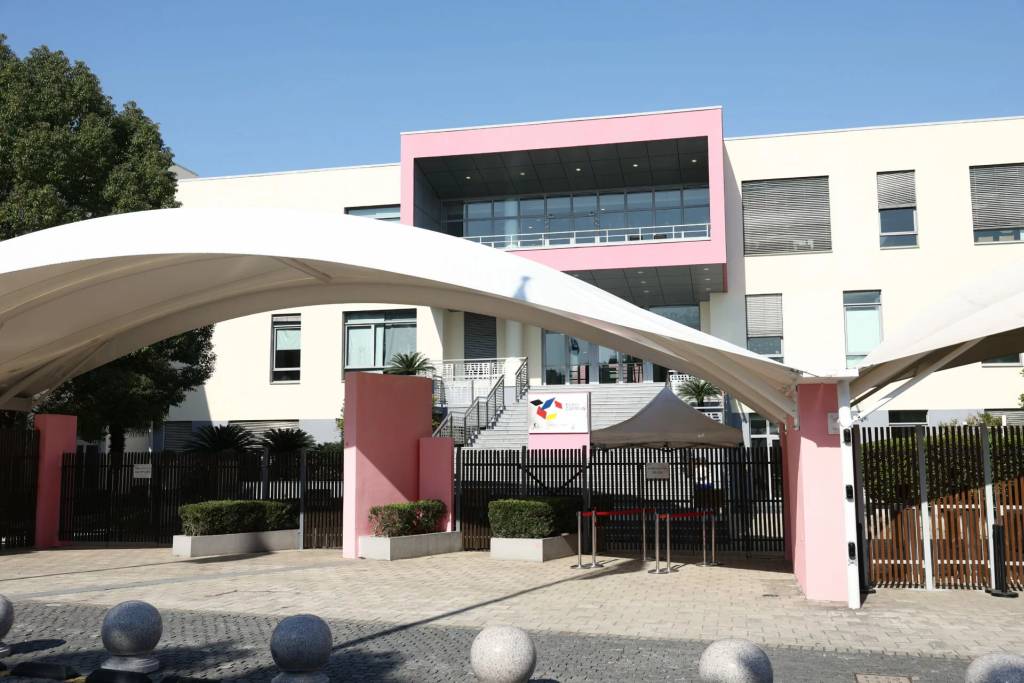
Shanghai French School (LFS) is part of the AEFE network — the Agency for French Education Abroad, which runs 600 schools across 138 countries — and is contracted directly with the French Ministry of Education. It serves 1,620 students from 60 nationalities across two campuses, both “Eurocampuses” purpose-built and shared with the German School Shanghai. The school’s defining feature is its trilingual model: French, Chinese, and English are all mandatory from kindergarten, with dedicated streams offering a stronger focus on English (SIA/SEA), Chinese (SICOC), or the general French stream. Non-French-speaking students are supported through the FLSCO program (20+ teachers, 300+ students, up to 12 hours per week of personalized French immersion).
Academically, LFS posted a 100% Baccalauréat success rate in 2026 (vs. 95% in France), with 97% of students earning a mention/distinction (vs. 68% in France) and 50% receiving the highest honours (vs. 8% in France). The school was ranked among the top 10 French schools abroad out of 112 prestigious lycées and entered the Forbes China international school ranking in 2026. Graduates go on to Oxford, Cambridge, Imperial, LSE, Brown, UC Berkeley, McGill, Sciences Po, École Polytechnique, ESSEC, and universities across France, the UK, North America, and Asia.
For families renting in Old Xuhui (FFC) or Jing’an, it’s important to be realistic about the geography: neither campus is a short commute. The Qingpu campus sits in the western suburbs near the Hongqiao/Min hang border (roughly 30–40 minutes by car), while the Yangpu campus is in the northeast near Wujiaochang (also 30+ minutes). Both are suburban Eurocampuses with sports facilities, 25m pools, and theatres, but if your priority is walking distance or a short school bus from the FFC, schools like SCIS (Hongqiao Road, Changning) or YCIS (Gubei) are noticeably more central. The school bus service does cover FFC and Jing’an, but the daily drive is longer than for the Puxi-based schools closer to town.
German School Shanghai (Deutsche Schule Shanghai)
| Curriculum | German National Curriculum (Thuringia framework) → Deutsches Internationales Abitur (DIA), with alternative tracks: Realschulabschluss, Hauptschulabschluss, and Fachhochschulreife (FOS in Business & Administration). Bilingual subjects lead to CertiLingua certification. Languages: German, English, Chinese from kindergarten; French, Spanish, or Latin added in secondary. |
| Campuses | Qingpu: 350 Gaoguang Road, Qingpu District (shared Eurocampus with the French School, ~800 students) · Yangpu: 758 Jiangwancheng Road, Yangpu District (shared Eurocampus with the French School, ~350 students, opened 2020) |
| Ages | 18 months–18 (Krippe through Grade 12 / Abitur) |
| Fees (2026/27) | School (Primary–Secondary): RMB 208,600/year · Kindergarten: RMB 153,600/year · Pre-Kindergarten (Krippe): RMB 166,500/year. Books, materials, and class trips are included; lunch, bus, and optional activities are extra. One-time: registration RMB 5,000, admission fee RMB 30,000, refundable deposit RMB 125,000 (employer-paid) or RMB 75,000 (self-payer). Bus ~RMB 15,280/year. DaF (German as foreign language) support: RMB 30,000/year for non-German speakers. |
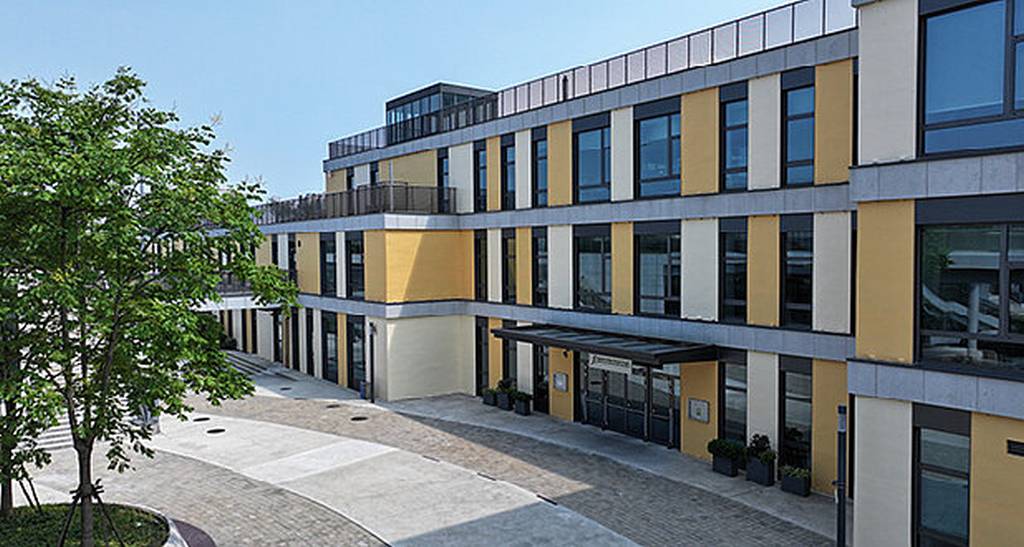
Founded in 1995 with just four students in a Shanghai living room, Deutsche Schule Shanghai has grown into one of the largest German schools outside Germany, serving roughly 1,100 students from 20+ nationalities with around 150 educators. In 2025, the school merged its two former entities: the Hongqiao school and the former Pudong school (which relocated to Yangpu in 2020) — into a single “Deutsche Schule Shanghai” across two Eurocampuses. Both campuses are shared with the French School of Shanghai, creating a distinctive Franco-German international environment.
The school is accredited by the German Standing Conference of the Ministers of Education (KMK) and has held the “Exzellente Deutsche Auslandsschule” (Excellent German School Abroad) seal since 2011. It also carries CertiLingua certification (for bilingual subjects and European/international competence), has been a MINT-freundliche Schule (STEM-friendly school) since 2012, and was recognized as a fobizz school for digital education in 2024/25 and 2025/26. The G8 Gymnasium path leads to the DIA (German International Abitur), recognized as university entrance qualification in Germany and internationally. Notably, DSS is one of only two German schools abroad offering the Fachoberschule (FOS) track in Business & Administration, which leads to Fachhochschulreife (university of applied sciences entry). Non-German-speaking students receive structured DaF/DaZ support (up to 12 hours/week), though this is a paid add-on and reaching B1 level is required to transition into regular classes.
For families renting in Old Xuhui (FFC) or Jing’an, the same geography applies as for the French School: neither Eurocampus is a short commute. The Hongqiao/Qingpu campus sits in the western suburbs near the Hongqiao/Min hang border (~30–40 min by car), while the Yangpu campus is in the northeast near Wujiaochang (~30+ min on the other side). School bus routes cover most of Shanghai, including the FFC/Jing’an area. The key thing to understand is that DSS is genuinely a German-medium school — German language proficiency is effectively required from Grade 1 onward, and the DaF program (at extra cost) is the bridge for families where German is not the home language. If you’re a German-speaking family, it’s the natural choice; if you’re an expat who simply values a rigorous European education, the German-language immersion requirement is a serious commitment that should not be underestimated.
Shanghai Livingston American School (SLAS)
| Curriculum | California Common Core (American standards) → AP courses in High School; secondary ELD support for non-English speakers |
| Location | 580 Ganxi Road, Changning District (near Songhong Road metro, Line 2) |
| Ages | Nursery (age 3) through Grade 12 |
| Fees (2026/27) | RMB 140,516 (Nursery–Pre-K) → RMB 171,518 (Kindergarten) → RMB 213,003 (Elementary) → RMB 225,740 (Middle School) → RMB 232,914 (High School) per year. Application fee RMB 2,500; one-time capital fee RMB 8,000; annual technology fee RMB 2,000. Bus ~RMB 9,000–9,300/semester; lunch RMB 35/day. |
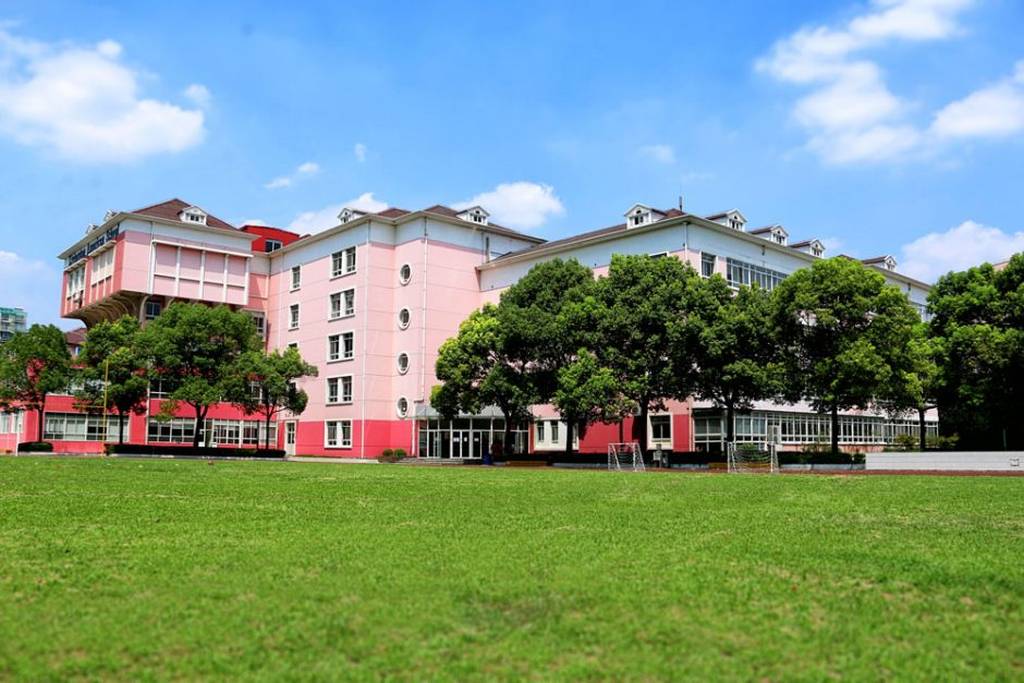
Shanghai Livingston American School is the budget-conscious expat’s answer to an American curriculum in Shanghai. Founded in 2003 and accredited by WASC since 2009, SLAS follows California’s public school standards (Common Core) from Nursery through Grade 12, with AP courses in High School. The school serves 30+ nationalities and is a member of ACAMIS and SISA, which means its students compete and collaborate with peers at other Shanghai international schools through inter-school sports, music, and arts events.
What sets SLAS apart is price and location. At RMB 140,000–233,000 per year, it is roughly 30–40% cheaper than SAS Puxi, and its Changning campus on Ganxi Road (near Songhong Road metro, Line 2) is noticeably closer to the FFC/Jing’an area — about 20–25 minutes by car, compared with 30–40 minutes out to SAS’s Minhang campus. It’s a smaller, community-oriented school, not a sprawling 100-acre campus, but families who choose it consistently cite the personalized attention, the California curriculum’s direct relevance for students who may return to the US, and the fact that WASC accreditation means transcripts are accepted by universities worldwide.
For families renting in Old Xuhui or Jing’an who want an American education but find SAS either out of budget or too far west, SLAS fills a genuine gap. It’s not a name that carries the prestige of SAS, and it doesn’t offer the breadth of facilities or the AP Capstone diploma — but for many North American families, the combination of a California-standards education, AP courses, WASC accreditation, a central Changning location, and a fee structure that’s dramatically lower than the premium end of the market makes it a compelling practical choice.
Pudong Schools Worth Knowing
Even if you’re living in Puxi, it helps to understand the Pudong landscape — especially if your workplace is there, or if you’re comparing options.
Concordia International School Shanghai
| Curriculum | American-style curriculum → Advanced Placement (AP) courses (up to 3 in Grade 11, up to 4 in Grade 12) plus Applied Learning (AL) courses. Global Online Academy (GOA) courses also available. |
| Location | 345 Huangyang Road, Biyun Community, Jinqiao, Pudong (single purpose-built campus) |
| Ages | Preschool (age 3) through Grade 12 |
| Fees (2026/27) | RMB 250,000 (Preschool–Pre-K) → RMB 314,000 (K–Grade 5) → RMB 322,000 (Grades 6–8) → RMB 330,000 (Grades 9–12) per year. Application fee RMB 2,500; one-time capital fee RMB 25,000; ELL support RMB 20,000 (if assessed). Bus RMB 23,000/year; lunch RMB 22–40/day; uniform ~RMB 1,000/year. |
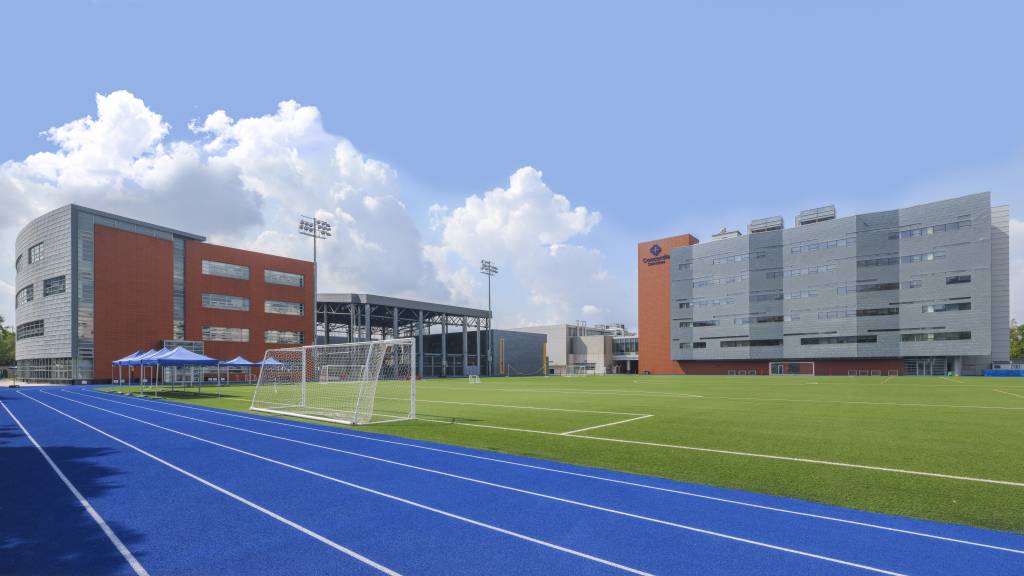
Concordia opened in 1998 with just 22 students and 14 staff, founded by a group of American expats and multinational corporations with support from educators at Hong Kong International School. Today it serves roughly 1,050 students across a single campus in Jinqiao’s Biyun Community (the purpose-built expat residential area also known as Green City). The school is affiliated with the Lutheran Church Missouri Synod and accredited by both WASC and ACSI, and it maintains a maximum class size of 18 — small by Shanghai international school standards.
Academically, Concordia runs an American-style curriculum culminating in AP courses (not the IB Diploma, which is an important correction from the old listing). In Grade 11 students may take up to 3 APs; in Grade 12, up to 4. The school also offers Applied Learning courses and access to the Global Online Academy (GOA) consortium, which lets students take specialized online courses from leading international schools worldwide. In 2026, Concordia is completing the Rittmann Center — a major new facility featuring a 500-seat professional theater, an eight-lane 25-meter competition pool, and dedicated art and music spaces, due to open in fall 2027.
Concordia’s reputation rests less on exam statistics and more on its pastoral culture. It is consistently rated by parents as one of Shanghai’s most welcoming schools for newly arrived families — a real advantage when children are adjusting to life in a new country. For families renting in FFC or Jing’an, the Jinqiao location means a cross-river commute: roughly 30–45 minutes off-peak, 60+ minutes during rush hour. If you’re considering Concordia, it generally makes sense to also look at Jinqiao/Biyun rental compounds rather than staying in Puxi — the school bus covers the Puxi area, but most Concordia families live in Pudong for a reason.
Wellington College International Shanghai
| Curriculum | English National Curriculum → IGCSE → IB Diploma Programme |
| Location | 1500 Yao Long Road, Qiantan / New Bund area, Pudong |
| Ages | 2–18 (Early Years, Primary, Secondary) |
| Fees (2026/27) | RMB 292,400 (Pre-Nursery–Reception) → RMB 324,600 (Years 1–5) → RMB 341,800 (Year 6) → RMB 356,700 (Years 7–9) → RMB 380,300 (Years 10–11) → RMB 391,000 (Years 12–13) per year. Includes textbooks, exam fees, and most co-curricular activities. Excludes lunch, uniform (~RMB 3,700), and bus (~RMB 22,050/year). Application fee RMB 3,500; refundable resource fee RMB 18,000. |
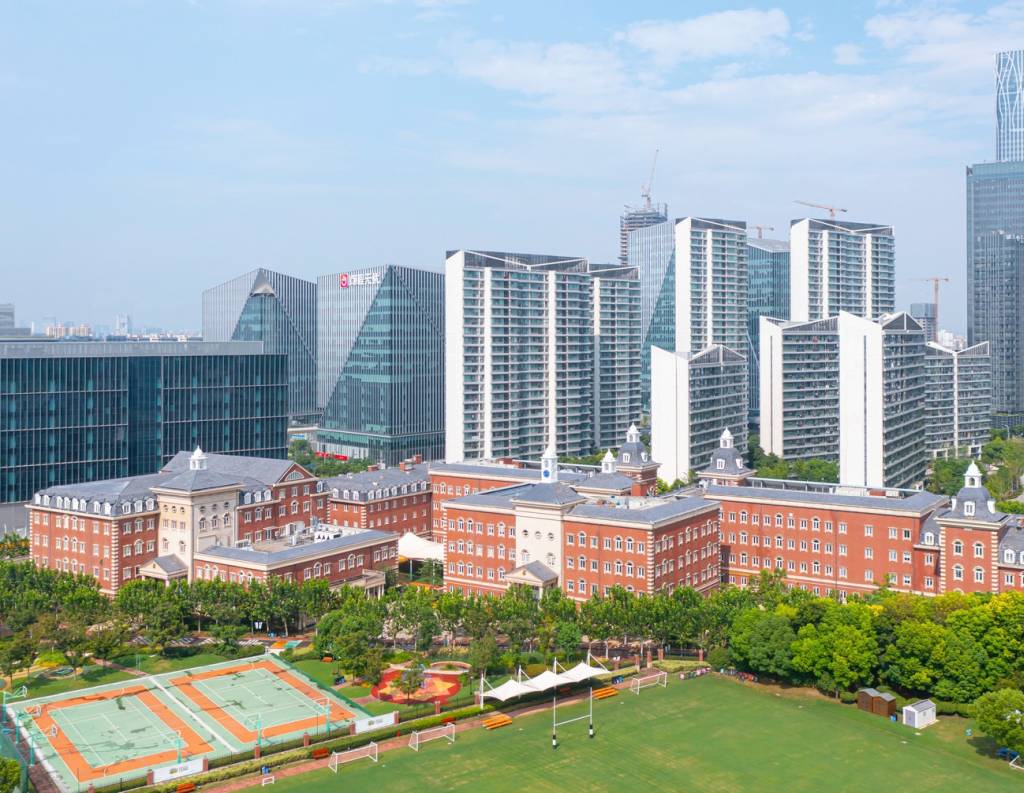
Wellington College International Shanghai opened in August 2014 as the Shanghai campus of Wellington College, the prestigious British public school founded in 1859 in Berkshire. It serves roughly 1,400 pupils from 44 nationalities, with a pupil-teacher ratio of just 7:1 — among the lowest in Shanghai. The student body is notably international: 34% North American, 25% Greater China (including HK, Macau, Taiwan), 14% other nationalities, 7% UK, 7% European, 7% Australasian, and 6% rest of Asia. In 2026, Wellington Shanghai was ranked #1 in China by the Forbes China International Schools Annual Selection and #6 nationally by the Hurun Education Top International Schools list.
Academically, the school delivers strong results. The Class of 2026 achieved an average IB score of 37.4 (vs. global average of 30.6), with one-third of students scoring 40+ (vs. 9% worldwide) and two perfect 45/45 scores. At IGCSE level, 92% of pupils achieved A*/A in History and Art, 100% in Modern Foreign Languages, and 82% in Natural Sciences. SAT averages came in at 1429 (75th percentile: 1530). Graduates go on to a genuinely global spread — 42% to the US (Brown, Columbia, Cornell, Dartmouth, Duke, Georgetown, UChicago, UCLA), 36% to the UK (Oxford, Cambridge, Imperial, LSE, UCL), 13% to Europe, and the rest to Canada, Asia, and Australia.
For families renting in Old Xuhui or Jing’an, Wellington’s Qiantan location is one of the more accessible Pudong options — it sits on the Pudong riverfront near the New Bund development, roughly 25–35 minutes by car from the FFC without a long cross-river commute. That said, the fee structure is at the absolute premium end of the Shanghai market (RMB 292K–391K per year, plus extras), and the school’s Fellowship program — which requires a minimum of 38 IB points — reflects an academically ambitious culture. If you want a British-heritage school with IB results that genuinely rival Dulwich, and you’re willing to pay top-tier fees for a riverfront Pudong campus, Wellington is among the best options in the city.
Nord Anglia International School (NAIS) Shanghai Pudong
| Curriculum | English National Curriculum → IGCSE → IB Diploma Programme (AP option in Years 12–13) |
| Location | 2888 Junmin Road, Pudong New District, Shanghai |
| Ages | 2–18 (Pre-Nursery through Year 13) |
| Fees (2026/27) | RMB 278,390 (Pre-Nursery–Reception) → RMB 329,800 (Years 1–6) → RMB 362,780 (Years 7–9) → RMB 386,060 (Years 10–11, IGCSE) → RMB 388,970 (Years 12–13, IB/AP) per year. Includes books, exam fees, and educational materials. One-time: application fee RMB 4,000, enrolment fee RMB 4,500, refundable resourcing fee RMB 16,000. Bus RMB 22,820/year; lunch RMB 26–49/day; annual residential trips RMB 300–8,200 depending on year. |
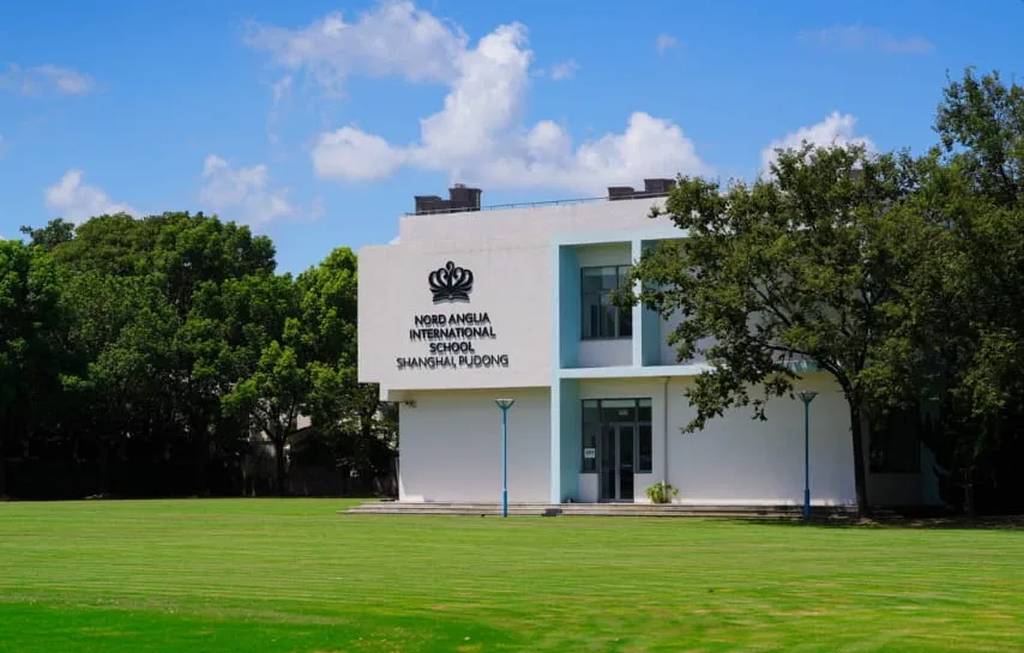
NAIS Pudong claims a genuine piece of Shanghai international school history: it was the first British school in China, opened in 2002 by then-British Trade Minister Patricia Hewitt MP, and the first international school in Pudong. Two decades on, it serves students from 40+ nationalities with an average class size of 20, and it has been delivering the IB Diploma for over 20 years. The school is part of the Nord Anglia Education network — 90+ premium schools worldwide — which gives its students access to unique global collaborations with MIT (for STEAM programming), the Juilliard School (for performing arts), and IMG Academy (for sports development).
Academically, the numbers are strong. The Class of 2025 achieved an average IB score of 37, with a 100% pass rate for five consecutive years and a top score of 43. Graduates go on to Oxford, Imperial College London, ETH Zurich, UCL, UC Berkeley, and McGill, among other leading universities. The school also offers an AP option alongside the IB Diploma in Years 12–13, giving families a choice between two recognized US/UK university pathways.
For families renting in Old Xuhui or Jing’an, the Junmin Road campus is the furthest east of the Pudong schools in this guide — it’s in the Jinqiao/Zhangjiang area, roughly 40–50 minutes by car from FFC during rush hour. Unlike Wellington’s Qiantan riverfront location (which is a relatively manageable cross-river commute) or Concordia’s Biyun/Jinqiao campus (which sits in the middle of Pudong’s expat compounds), NAIS Pudong is really a school that makes sense if you’re already living in Pudong — particularly in the Jinqiao, Zhangjiang, or Beicai residential areas. If your heart is set on Puxi, this is not the school you choose.
Key Practical Advice for Families Relocating to Shanghai
Apply early — very early. Popular year groups at schools like Concordia and Nord Anglia can fill by January for August entry. If you know your move is coming, start the application process 9–12 months ahead.
The Puxi/Pudong decision matters more than the school name. A slightly less prestigious school 15 minutes from home will serve your child better than the “best” school across the river during rush hour.
Foreign passport is required for most international schools. This applies to the child or at least one parent, depending on the school. Mainland Chinese passport holders should look at bilingual schools specifically.
Budget for more than tuition. Annual fees are just the starting point. Families should budget separately for school bus (RMB 20,000–45,000 per year), lunch, uniforms, and exam fees at IGCSE and IB level. Total annual costs sometimes can run RMB 50,000–70,000 above headline tuition.
School choice often drives neighbourhood choice. Many families we work with choose their apartment after deciding on a school, not before. If you’re weighing a school in Changning, a lane house in Old Xuhui or a compound in Jing’an puts you well within practical commuting distance — and in some of Shanghai’s most sought-after neighbourhoods for expat living.
How We Can Help
At Shanghai Rentals, we specialise in finding expat families the right home in Old Xuhui (FFC), Jing’an, Changning and beyond — the neighbourhoods that put you closest to Puxi’s best international schools, Shanghai’s finest café culture, and the tree-lined streets that make this city genuinely special to live in.
If you’re relocating to Shanghai and want to talk through the school-neighborhood balance, our team speaks fluent English and knows these areas inside out. Get in touch with Tomas — we’d love to help you find your Shanghai home.
Fees and school information are based on school website data as of November 2026. Always verify directly with individual schools, as fees and curricula are reviewed annually.

Join The Discussion