

If you are an expat family living in central Shanghai, you have probably heard the name. You may have seen it in rankings, heard it mentioned at a playdate, or noticed it on a school bus route winding through Jing’an.
YK Pao School is one of the most sought-after bilingual schools in China. Its Primary Campus sits on the Jing’an–Changning border, minutes from the Former French Concession. For families who want their children to learn genuine, fluent Chinese without sacrificing English or academic rigor, it is often the first name that comes up.
But getting in is not simple. And it is not the right fit for every family.
This guide covers everything you need to know about YK Pao Primary School — location, curriculum, admissions, costs, and an honest assessment of who it suits best.
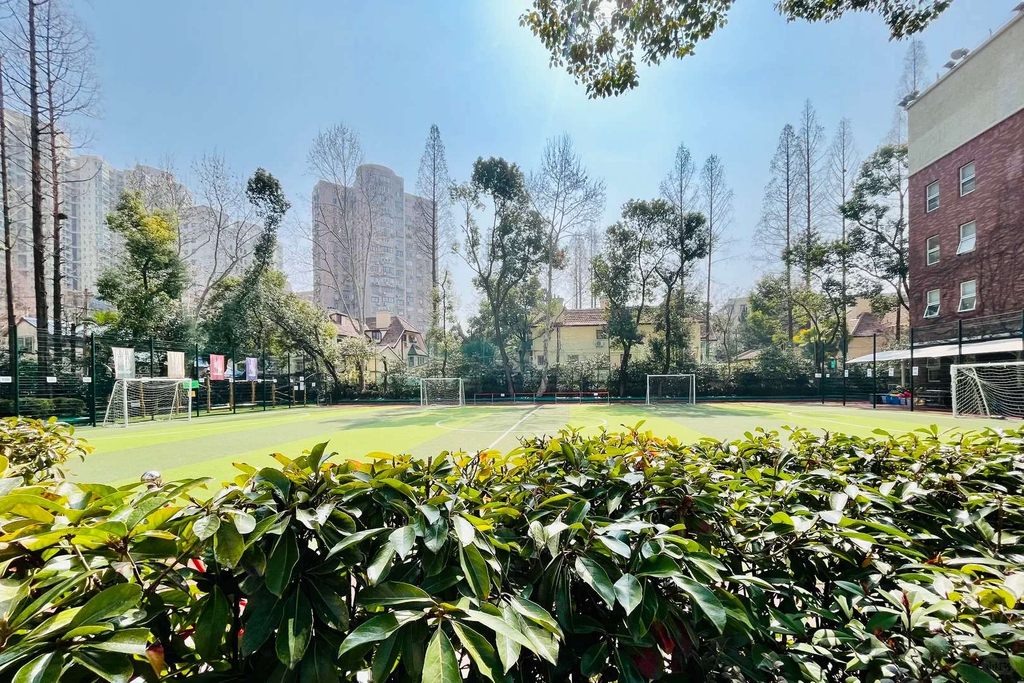
Quick Facts
Why Location Matters: The Central Advantage
The YK Pao Primary Campus is located in Changning District, directly on the border with Jing’an. For families who want to live in the heart of Shanghai, this is a significant advantage.
Most international schools in Shanghai are in far-flung locations — Minhang, Pudong, Qingpu, Songjiang. Families who choose those schools often accept long commutes, early morning bus rides, or moving to the suburbs.
YK Pao Primary School is different. It sits in central Shanghai, within easy reach of:
- Jing’an District: 10-15 minutes by car
- Former French Concession (Old Xuhui): 15-20 minutes
- Changning (Gubei/Hongqiao): 10-15 minutes
- Zhongshan Park area: 5-10 minutes
For families who want to keep their city-center lifestyle — the cafes, the walkability, the cultural life — while still giving their children a world-class bilingual education, this is one of the few options that makes it genuinely workable.
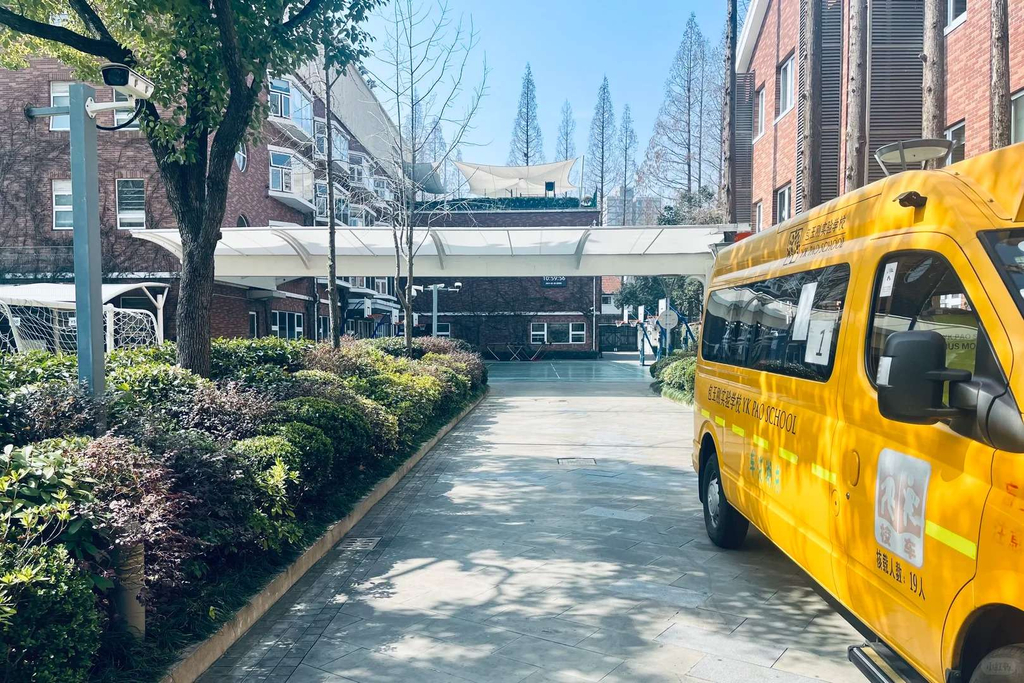
The Bilingual Model: What Makes It Different
YK Pao School was the first school in mainland China where Chinese and international students learn in the same classroom . This is not a school with a separate “international stream.” It is a genuinely integrated bilingual programme.
What this means in practice:
- Dual immersion: Students learn in both Mandarin and English throughout the day. It is not “Chinese class plus English class.” It is an integrated approach where both languages are used as mediums of instruction .
- Chinese National Curriculum + international methods: The school integrates the Chinese National Curriculum with international pedagogical approaches. This means your child gets the academic rigor of the Chinese system — particularly in mathematics and Chinese language — delivered through more inquiry-based, student-centered teaching methods .
- Character education: The school’s core values are Compassion, Integrity, and Balance. Character education is not an add-on; it is central to the programme .
For families who want their children to achieve genuine fluency in Chinese — not just survival Mandarin — this model is one of the most effective available. Five years of full bilingual immersion at the primary level produces genuinely bilingual children.
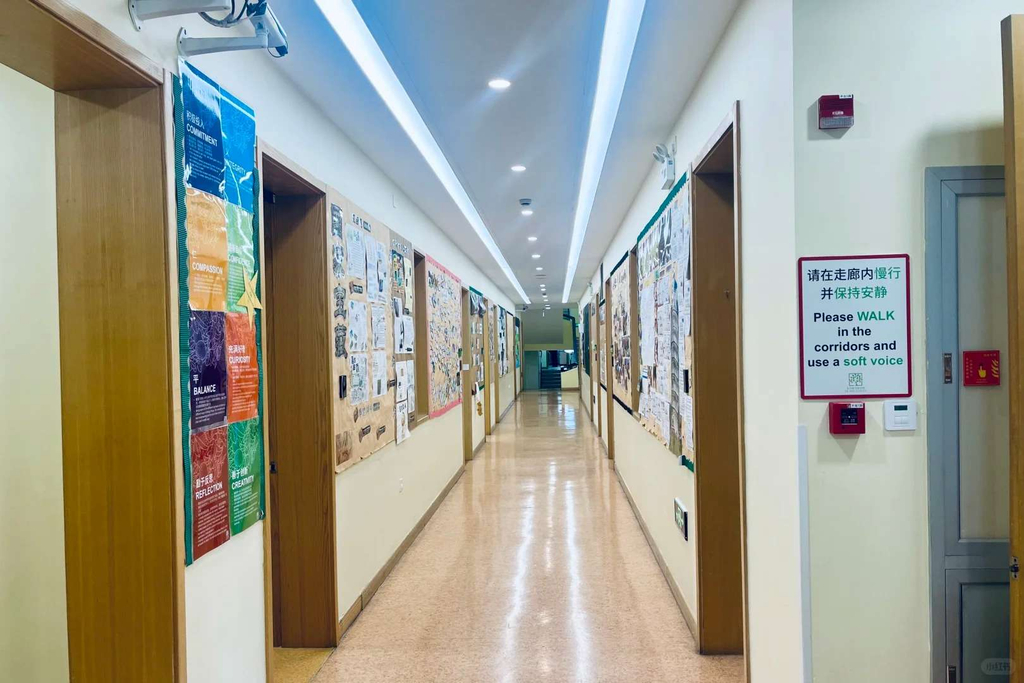
The Campus: Small, Purpose-Built, and Primary-Only
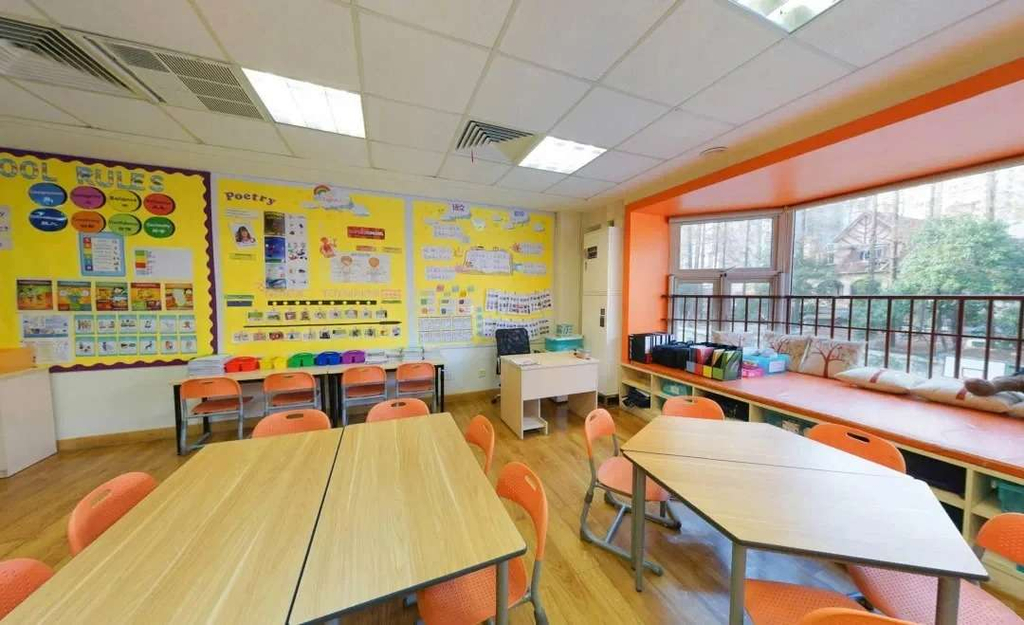
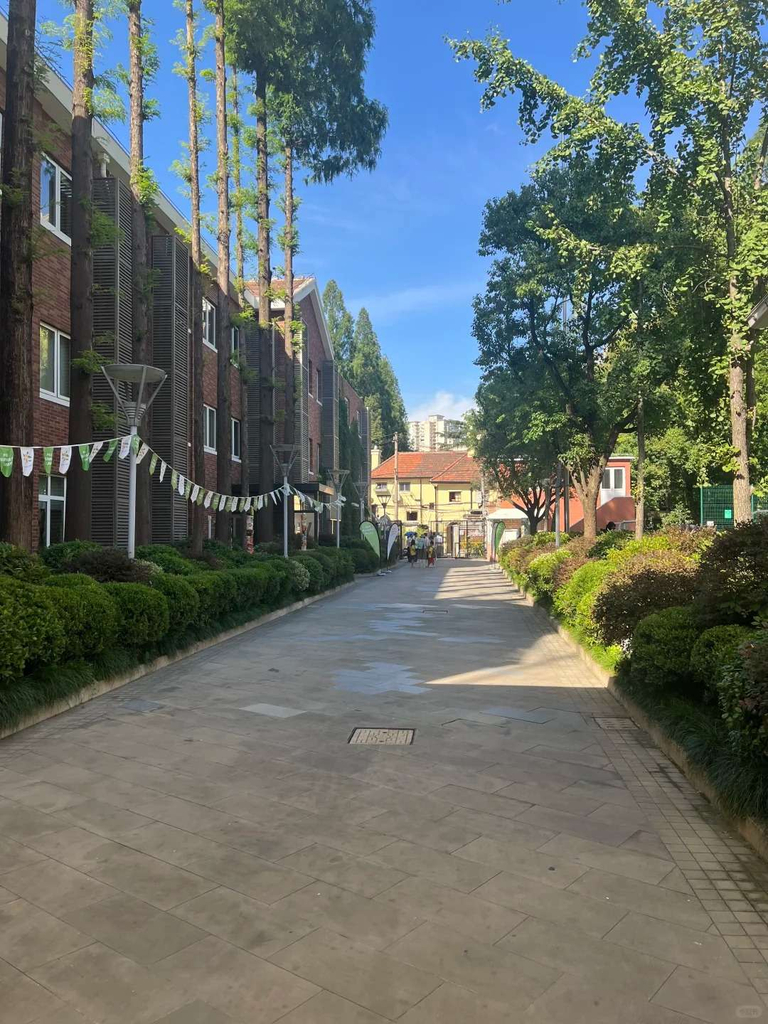
One of YK Pao’s quiet advantages is something families often overlook until they visit: the Primary Campus is only for primary students.
This is not a school where 5-year-olds share hallways with 15-year-olds. The Primary Campus is a dedicated, purpose-built environment for Years 1–5. There are approximately 600 students on this campus .
Why this matters:
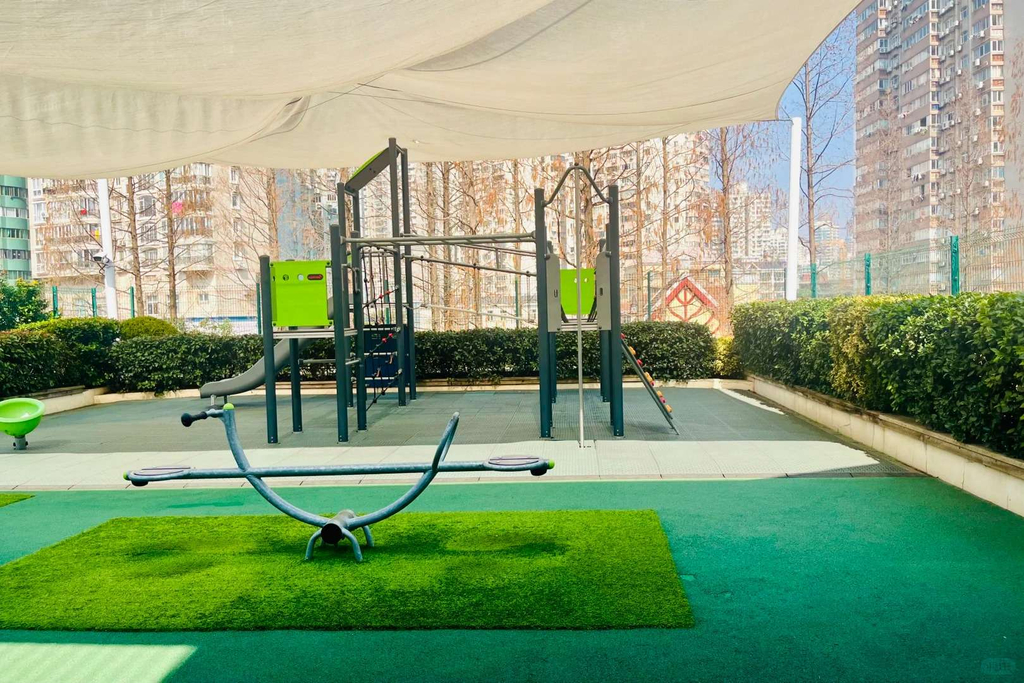
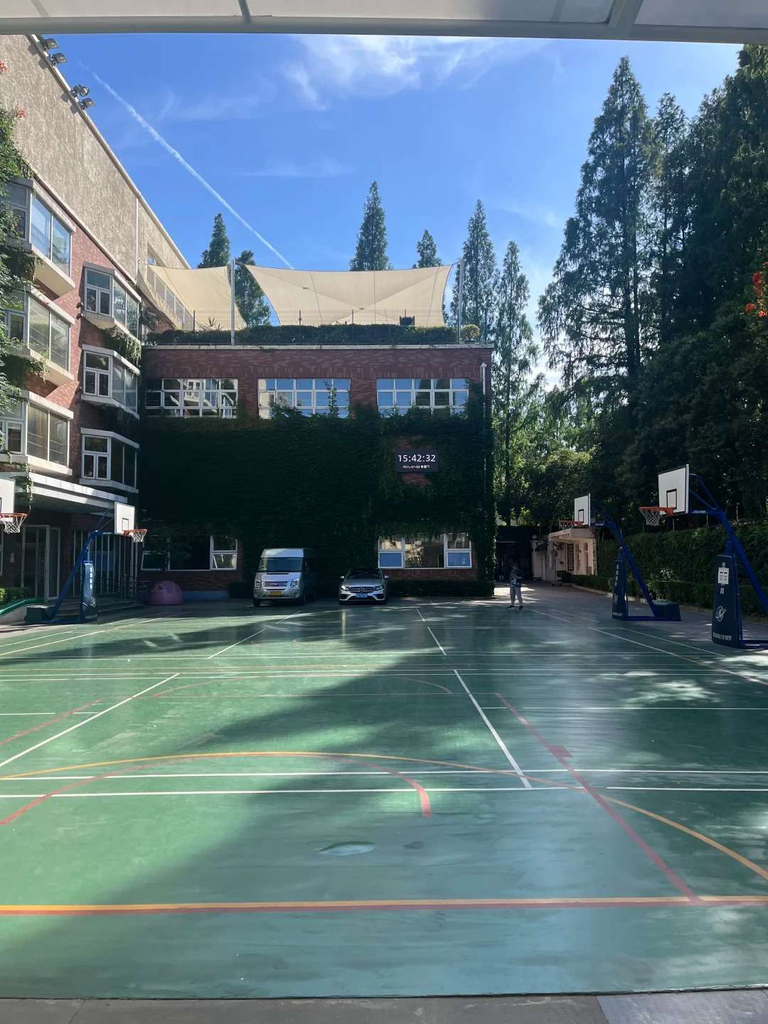
- Less crowded: The campus is scaled to young children. Playgrounds, libraries, and dining areas are designed for primary-aged students, not adapted from a shared all-through school.
- Age-appropriate environment: Your child is not navigating a massive campus or competing for space with teenagers.
- Strong community: With only 600 students, the parent community is tight-knit and involved.
The campus also has practical features that matter in Shanghai: 新风系统 (fresh air systems) in all classrooms to manage air quality, and upgraded direct drinking water systems . The roof garden was recently renovated and is a popular student area .
Rankings and Reputation: The Evidence
YK Pao School’s reputation is not marketing. It is documented.
Hurun Education Survey: YK Pao has been ranked the top bilingual school in China by the Hurun report multiple times. In five of the six years leading up to 2025, it held the top spot .
Forbes China: In 2025, Forbes ranked YK Pao as the top international school in China .
University outcomes (for context): While the Primary Campus is only the beginning of the journey, the school’s graduates have been accepted to Oxford, Cambridge, UCL, Yale, Columbia, MIT, the University of Chicago, Caltech, and other top institutions worldwide . In recent IBDP results, Pao School students achieved an average score of 39, with 8 students scoring the maximum 45 points. For example, in 2024, YK Pao School graduates received 6 Oxford offers, 5 Cambridge offers, 60+ offers from global Top 30 universities, and 8 Ivy League offers (including Princeton, Yale, 2× Brown, Columbia, 2× Cornell)
The Primary Campus is the foundation of this pipeline. Families who enter at Year 1 and stay through Year 5 are building the academic and linguistic base for that trajectory.
Admissions: How to Get In (and Why It Is Not Easy)
This is where YK Pao School differs significantly from most international schools.
The Lottery System
For Year 1 entry, admission is determined by a computerized lottery (电脑随机录取), not by entrance exams . This is a Shanghai Municipal Education Commission requirement for compulsory education.
However, the lottery is not a single pool. It is divided into categories :
| Category | Quota (2025) | Notes |
|---|---|---|
| Shanghai General (统招) | 48 students | For families meeting Shanghai enrollment conditions |
| International Students (外籍学生) | 25 students | For foreign passport holders meeting specific criteria |
| Hong Kong/Macau/Taiwan | 24 students | |
| Staff Children | 8 students | |
| Founder’s Staff Children | 15 students |
For expat families, the International Student pool is the relevant category. The requirements are specific :
- The child must hold a foreign passport with a valid Chinese visa (residence permit)
- One parent must hold a valid foreign passport, a one-year residence permit, and a valid Foreigner’s Work Permit
- Parents must provide proof of residence in Shanghai
The key insight: because the International Student pool is separate, foreign families are competing against a smaller pool than the general Shanghai pool. This can mean a better statistical chance of selection, even though the absolute numbers are smaller.
The Reality of the Lottery
The school describes its admissions process as “invitation-based” (邀请制). Completing the online registration does not guarantee an assessment opportunity . The school reviews submitted materials first, and only then sends assessment invitations.
For Year 1, there are no entrance exams. The lottery determines admission. This means preparation matters less than eligibility and timing.
Transfer Admissions (Years 2–5)
Transfer entry is not lottery-based. It is exam-based, and it is harder.
Transfer applicants must go through two rounds of assessments :
- Written assessment: Chinese, English, and Mathematics. The Chinese assessment tests literacy, vocabulary, and comprehension. The math assessment follows the Shanghai curriculum (沪教版) and includes some competition-level content. The English assessment requires reading and writing at a level above the standard local curriculum .
- Oral assessment and interview: Student interview plus parent interview. The parent interview assesses whether the family’s educational philosophy aligns with the school’s .
Admission is placement-dependent — a spot must be available in that specific year group. Given the school’s popularity, transfer spots are extremely limited and often filled quickly.
Eligibility: Who Can Apply?
YK Pao accepts both Chinese and foreign students . This is different from pure international schools, which typically only accept foreign passport holders. For mixed families or Chinese families who want a bilingual education, this is a key advantage.
The four eligibility categories are :
- A. Shanghai Household Registration (上海户籍)
- B. Non-Shanghai Household Registration (非上海户籍)
- C. Hong Kong/Macau/Taiwan Residents
- D. International Passport Holder
Tuition and Costs: Less Than International, More Than Local
Primary School Tuition (2025/26) :
- RMB 84,000 per semester
- RMB 168,000 per year
For context:
- Pure international schools in Shanghai typically charge RMB 250,000–350,000+ per year
- Local public schools are essentially free
- Bilingual private schools vary widely, from RMB 80,000 to RMB 200,000+
YK Pao sits in the upper-middle range for bilingual schools. It is significantly less expensive than most international schools, while offering a more rigorous bilingual education and stronger Chinese language outcomes.
Additional costs include meals, uniforms, and school bus service (available for Primary and Middle School campuses) . There is no registration fee for applying .
An Honest Assessment: Who Is This School For?
YK Pao Primary School is an excellent school. But it is not the right fit for every family.
YK Pao Primary is a good fit if:
- You plan to stay in Shanghai long-term. The bilingual model is cumulative. Five years of primary education builds genuine fluency. Leaving after one or two years means your child gets a taste but not mastery.
- You want your child to be genuinely bilingual. Not “can order food in Chinese.” Actually bilingual — able to read, write, and think in both languages.
- You want a central location. If you live in Jing’an, the FFC, or Changning, this school is convenient. If you live in Pudong or Minhang, the commute is significant.
- You value academic rigor with a whole-person approach. YK Pao is academically strong, but it is not a pressure-cooker. Character education and balance are core values.
- You are willing to commit to the lottery process. Year 1 entry is a lottery. There is no guarantee. You need a backup plan.
YK Pao Primary may not be the right fit if:
- You are only in Shanghai for 1–2 years. The bilingual model needs time. Short-term families may find that the investment does not pay off in the same way.
- You need guaranteed admission. The lottery means uncertainty. If you cannot accept that risk, an international school with rolling admissions may be a better fit.
- You want a purely English-language education. YK Pao is genuinely bilingual. If you want your child educated primarily in English with Chinese as a second language, a traditional international school is more appropriate.
- You are not prepared for the parent interview. The school assesses whether your family’s values align with its philosophy. This is not a formality.
Practical Advice for Expat Families
1. Start early. The 2026–2027 registration opened in August 2026 . For Year 1 entry, you need to complete the online registration and submit materials well before the lottery. Do not leave it to the last minute.
2. Visit the school. YK Pao runs information sessions, open houses, and “Exploration Day” events . Attend one. You will learn more in an hour than in weeks of online research.
3. Prepare for the parent interview. For transfer admissions, the parent interview is a real assessment. Read about the school’s philosophy (whole-person education, bilingual immersion, character development) and think about how your family’s values align.
4. Have a backup plan. If you are applying for Year 1, the lottery is uncertain. Identify an alternative school — either another bilingual school or an international school with more predictable admissions.
5. Think about the long game. YK Pao Primary is Years 1–5. Middle School (Years 6–8) is at a different campus (Hongqiao), and High School (Years 9–12) is in Songjiang with boarding . If you commit to YK Pao at Primary, you are committing to a long-term educational pathway.
Conclusion
YK Pao Primary School is one of the best bilingual schools in China. Its central location, dedicated primary campus, and genuine dual-immersion model make it uniquely suited to expat families who want to live in the heart of Shanghai while giving their children a world-class education in both Chinese and English.
The admissions process is competitive. The lottery introduces uncertainty. The commitment is long-term.
But for families who are ready to make that commitment, there are few schools in China that offer what YK Pao does: a genuine bilingual education, in the center of the city, at a price point below pure international schools.
If you are considering YK Pao Primary School for your child, start the process now. Visit the school. Understand the requirements. And plan for the long term.
Looking for a home near YK Pao Primary School? We know the compounds and lane houses in Jing’an, Changning, and the FFC that put you within a short commute of the campus.
Shanghai Rentals
WeChat: 13816427716
Email: info@shanghai-rentals.com

Join The Discussion