

One of the first questions you will face when looking for an apartment in Shanghai is: furnished or unfurnished?
The short answer is that almost every rental listing in Shanghai comes furnished. But “furnished” can mean anything from a bed, wardrobe, and sofa to a fully equipped home with everything you need on day one. Understanding what you are actually getting — and how to negotiate — can save you money and headaches.
Here is what you need to know about furnished and unfurnished rentals in Shanghai, including the market norms, the negotiation tactics, and how an experienced agency can make the difference.
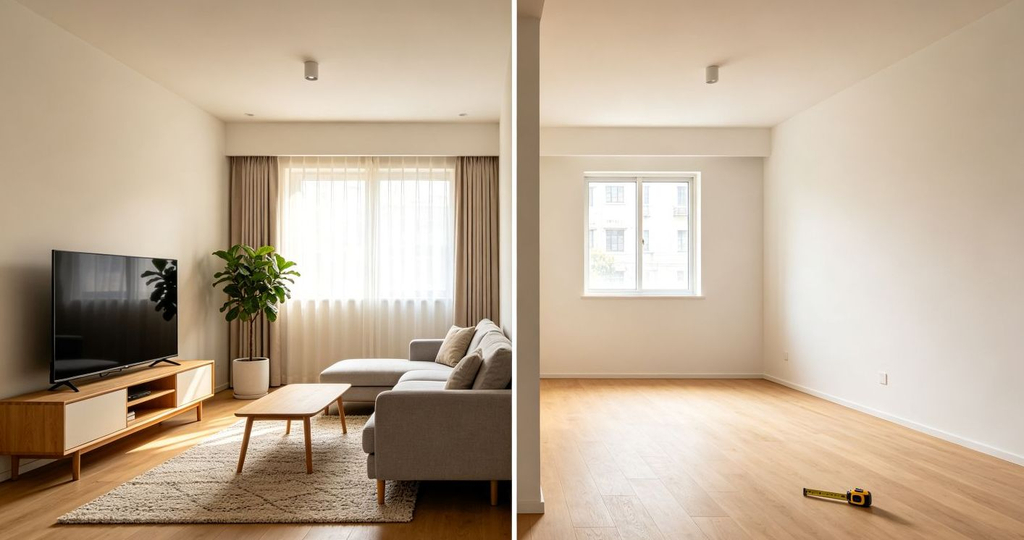
The Shanghai Norm: Furnished is the Default
In Shanghai, furnished rentals are the default. Most landlords expect to provide furniture, and most tenants expect to receive it. This is different from many Western markets where unfurnished apartments are common. If you see a listing that does not mention “unfurnished,” it is almost certainly furnished .
What does “furnished” typically include in a Shanghai rental?
- Essential furniture: Bed, wardrobe, sofa, dining table and chairs
- Core appliances: Air conditioning, fridge, stove, washing machine
- What is usually not included: Bedding, towels, kitchenware, oven, dryer
The gap between “furnished” and “fully equipped” can be significant. Many standard apartments come with the basics but require you to bring your own plates, pots, and linens. The more premium the property, the more likely it is to be truly turnkey .
The Unfurnished Option: When It Makes Sense
Unfurnished apartments exist, but they are less common. They typically fall into two categories:
1. Brand new units, first-time rentals: A landlord who has just completed a renovation may not have bought furniture yet. The unit is ready for a tenant to move in — but it is empty.
2. Tenant preference: Occasionally, a tenant arrives with their own furniture (usually company-paid relocation) and prefers an empty apartment rather than dealing with the landlord’s existing pieces.
If you have your own furniture, you can use this as a negotiation point to lower the rent, since the landlord does not need to provide furniture for you .
The Negotiation Playbook: How to Get What You Want
This is where an experienced real estate agency proves its value. Almost everything about furniture in a Shanghai rental is negotiable.
Scenario 1: The Unit Has Furniture, but You Don’t Like It
You love the apartment. You hate the sofa. What do you do?
What you can negotiate: Ask the landlord to remove specific pieces of furniture. Some will agree. Some will not. It depends on the landlord, the rent level, and your negotiating skills. In higher-rent apartments (10,000 RMB/month and above), landlords are generally more flexible .
What you can do: If the landlord will not remove furniture, you can ask them to store it. This is less common and usually requires negotiation at higher rent levels. Storage costs are typically around 200 RMB per month for 4 cubic meters .
Scenario 2: The Unit Is Unfurnished, but You Want Furniture
This is the “blank canvas” scenario. You like the apartment. It has no furniture. You want it furnished.
What you can negotiate: Ask the landlord to provide a furniture allowance. The landlord gives you a budget to buy furniture yourself. You choose the pieces, you buy them with the landlord’s approval, and you keep the receipts. The furniture belongs to the landlord. The allowance is written into the lease before signing .
Why this works: The landlord gets a furnished apartment (which is easier to rent in the future). You get furniture you actually like. It is a win-win.
Scenario 3: You Have Your Own Furniture
You are relocating with your own furniture. You do not need the landlord’s pieces.
What you can negotiate: Ask the landlord to remove their furniture. If they agree, use the savings to negotiate a lower rent — since the landlord is saving the cost and hassle of providing furniture.
Scenario 4: During Lease Renewal
You have been in the apartment for a year. You want to add something — a bookshelf, a desk, an extra cabinet.
What you can negotiate: Ask the landlord for additional furniture during renewal. Small items like a bookshelf or additional storage are often easier to get than big-ticket items. It is a goodwill negotiation, not a demand.
The Role of an Agency: Why Experience Matters
All of these negotiations require skill, tact, and relationships. A good agency knows the landlords, understands the market norms, and can broker a deal that works for both sides.
What an experienced agency does:
- Tells you what is realistic to ask for and what is not
- Communicates your requests to the landlord in a way that maximizes the chance of agreement
- Documents everything in the lease so there is no misunderstanding
- Handles the follow-through — making sure the furniture you agreed on actually arrives
What happens without an agency: You negotiate with the landlord directly. You may not know what is reasonable. You may not know the market practice. You may agree to something verbally that never gets put in the contract. That is how disputes start .
Practical Takeaways
Know What “Furnished” Really Means
Before you sign, ask:
- What furniture is included? (Get a list.)
- What appliances are included?
- Is there bedding, towels, and kitchenware?
Do not assume “furnished” means “everything you need.” It rarely does in standard apartments. Premium serviced apartments and coliving spaces are more likely to be fully equipped .
Understand the Market Practice
- If the property is unfurnished, the landlord may provide a furniture allowance. The allowance is written into the lease .
- The landlord’s furniture belongs to the landlord. Any damage beyond normal wear and tear is your responsibility .
- Clubhouse membership is not automatically included. Negotiate it separately unless the compound includes it in the rent .
- Management fees are usually included in the rent, but the 5% rental tax (for an official receipt) is often not. Check before you sign .
When to Negotiate
| Situation | What to Ask For |
|---|---|
| You don’t like the furniture | Ask the landlord to remove specific pieces |
| The unit is unfurnished | Ask for a furniture allowance |
| You have your own furniture | Ask for a rent reduction |
| Renewing your lease | Ask for additional small furniture items |
| You want clubhouse access | Ask the landlord to include clubhouse membership |
The Bottom Line
Renting a furnished apartment in Shanghai is the default, but “furnished” does not mean “perfect.” The furniture may not be your style. Some pieces may be missing. Or the apartment may be completely empty.
The key is knowing what you want and negotiating for it. A good agency can help you navigate the process — from understanding what is reasonable to documenting the agreement in the lease.
That is where we come in.
Looking for an apartment in Shanghai? We know the landlords, the market norms, and the negotiation tactics. We will make sure you get the furniture you need — and the lease you deserve.
Shanghai Rentals
WeChat: 13816427716
Email: info@shanghai-rentals.com

Join The Discussion